

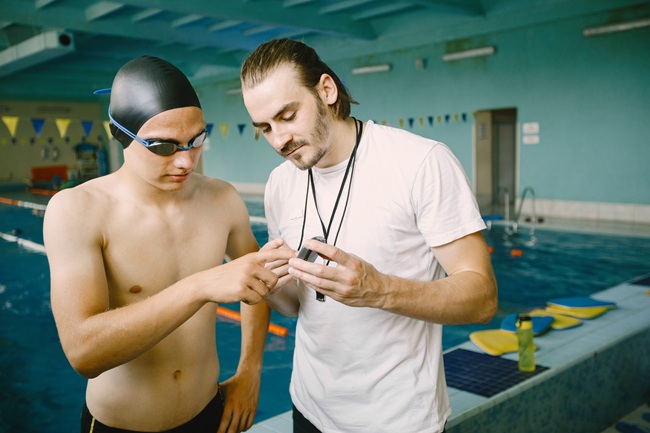
The tale of Hook Swim School & Aqua Centre frequently resembles hearing parents talk about a small, well-known location that quietly but profoundly influenced their kids. Many parents remember arriving with reluctant children who clung to them, only to depart a few months later with children who splashed freely and floated with pride. The center gained this reputation over the course of the previous 25 years by combining structured progression with gentle coaching, which parents found to be incredibly effective in fostering confidence. Even today, when people talk about their early pool days, their voices become softer and more appreciative than nostalgic.
As parents talk about problems with refunds and communication delays, the center has become the subject of more heated discussions in recent days. These worries have quickly gone viral on social media, frequently shared by families who thought they would get prompt updates and very clear explanations. Because the center has been a part of numerous childhood routines, the complaints are emotionally charged. When parents’ expectations change, their frustrations increase and they rightfully request long-overdue improvements. Speaking with those who continue to attend you learn that the instruction itself is still robust and comfortingly consistent.
Despite its quiet location in Chessington, the facility has welcomed generations of swimmers with varying degrees of confidence into its 15-meter pool. While slightly older kids practice dives in the deeper area, the shallow end is crowded with enthusiastic chatter from beginners learning how to kick correctly during the busiest terms. The atmosphere is vibrant without being disorderly, reminiscent of a school playground where energy is present everywhere. According to many families, these settings help kids unwind more quickly and pick up previously scary skills.
The teachers keep the kids interested while maintaining technique by using a teaching strategy that combines discipline and enjoyment. Parents frequently state that using progress tracking has significantly enhanced their comprehension of their child’s growth. Even though they are not physically next to the pool during classes, they have felt more involved in the process since the online tracker was introduced. Families that value observable indicators of development will especially benefit from the clarity it provides.
The center provides more than just weekly classes. Holiday crash courses offer children who benefit from intensive learning a very flexible alternative during school breaks. Due to the daily repetition, parents frequently report that these sessions yield results much more quickly. Adults and expectant parents can enjoy a supportive and incredibly calming environment with aqua aerobics and aquanatal yoga. The pool is kept busy all week long thanks to these additions, which have helped the center stay relevant for a variety of age groups.
Notwithstanding this solid base, some of the school’s advantages have been overshadowed by administrative difficulties. Frustrated parents have posted about emails that go unanswered and refund requests that take longer than anticipated. These messages’ disappointment usually reflects how much they trusted the center. Many parents view paying for lessons as an investment in their kids’ development rather than a minor choice. Emotions rise fast when such investments seem mismanaged. It is evident from these discussions that parents prefer solutions over conflict.
A more balanced perspective has been presented by a few regular attendees. They clarify that the teachers are still incredibly dependable and totally dedicated to the kids. A portion of the administrative flaws have been mitigated by their constancy. These families think that a lot of the recently damaged good faith could be restored with better communication. They assert that the school can change, particularly if it pays close attention to parent concerns and modifies its procedures appropriately. It is an optimistic, forward-thinking sentiment that subtly recognizes the significance of the center’s past.
Hearing parents recount how their child accomplished a first unassisted width or mastered a back float after weeks of hesitancy is particularly heartwarming. The center feels more than just a business because of these occasions, which are frequently celebrated with unexpected zeal. They transform it into a common milestone of childhood development. This emotional commitment has sharpened criticism over the past year, but it also keeps families hoping for the center’s improvement. They are aware of the benefits it has provided in the past, and many think it will continue to provide even greater experiences in the future.
By making strategic changes, particularly in communication and administrative procedures, the center may be able to restore the trust that has recently eroded. Dramatic reinvention is not what parents are requesting. All they want is the reliable structure that initially attracted them to the school, prompt responses, and clear policies. There is a remarkably consistent hope that the school’s leadership will acknowledge how important these changes have become when speaking with both current and former students.
This situation is particularly compelling because of the contrast between the quieter frustration expressed outside the pool area and the lively joy inside. Inside, teachers patiently and enthusiastically lead the kids. Parents wait outside for longer-than-expected emails or refunds. If the administrative aspect is treated with the same consideration as the teaching, the tension caused by the disparity between these experiences can be alleviated. The center could strengthen its reputation as a place where families feel supported from beginning to end by making these upgrades.
Families who continue taking lessons report that the pool’s energy is still familiar and uplifting. Kids chuckle, teachers support them, and development happens at a healthy and fulfilling pace. It’s especially motivating because it shows how eager kids are to learn in a friendly setting. Even though there will soon be administrative changes, these experiences will continue to influence the center’s legacy.
In many respects, Hook Swim School & Aqua Centre is in a unique position, juggling years of beneficial impact with an increasing need for more transparent procedures. Parents want the school to seize this opportunity and move forward with assurance. They think the center can continue to support young swimmers who find bravery, joy, and steady progress in its cozy, resonant space if there is improved communication and a renewed dedication to transparency.
| Name | Hook Swim School & Aqua Centre |
| Location | 7 Hawkhurst Gardens, Chessington, Surrey KT9 1AH |
| Founded | 1999 |
| Type | Family-run 15m swim centre |
| Services | Baby–adult lessons, private lessons, group classes, crash courses, aqua aerobics, aqua natal yoga, public swims, parties |
| Reputation | Friendly teaching, confidence-based learning, strong safety culture |
| Recent Issues | Refund disputes, delayed communication, parental frustration |
| Approach | Fun-led, structured progression, online tracking |
Football fields don’t make the same sound as suburban swimming pools on Saturday mornings. Naturally,…
A line of wet tote bags is waiting on a bench outside a community pool…
A small procession of parents wearing wet hoodies, holding rolled-up towels, and goggles still dripping…
During a swimming vacation, there is a point between the third and fourth day when…
Seven-year-olds are waiting their turn to push off in a row along the edge of…
At practically every public pool during the summer, there’s a moment that subtly reveals everything.…
Are Kids Safer When They Learn to Swim Early?
When parents enroll their kids in early swim lessons, they frequently report a subtle but significant change that occurs long before flawless strokes or elegant dives more akin to witnessing a timid child find their place in a crowded playground. After a few patient weeks, the instructor’s voice becomes comforting, the pool becomes familiar, and the water begins to feel less like a threat and more like a slightly unpredictable friend. At first, there is clinging and uncertainty. In recent years, this change has been documented not only anecdotally but also by pediatric organizations and researchers who are quietly but firmly addressing the major question: Are children safer when they learn to swim at a young age?
The American Academy of Pediatrics states that formal instruction starting at age one can greatly lower the risk of drowning, particularly for young children whose curiosity often outpaces their judgment. Health professionals’ conversations with new parents regarding water were significantly improved by this change in advice, which moved away from a “wait until four” mentality. These days, swim lessons are discussed in early checkups along with immunizations and sleep schedules, fostering a new belief that water safety starts almost as early as walking.
Toddlers pick up language and gestures more quickly than adults can keep up, which is why parents sometimes liken them to tiny sponges. That metaphor feels remarkably similar to what teachers witness on a daily basis in the pool. Young children mimic the movements they see, imitating arm movements, kicks, and bubbles with a resolve that occasionally seems comically serious. Early childhood educators use this natural imitation to teach skills like breath control, floating, and turning back to the wall in ways that resemble games but are actually incredibly useful survival techniques. It may seem like play to a parent observing from the sidelines, but safety experts analyzing the data see it as prevention.
Education researchers are interested in early lessons because they seem to provide a cognitive benefit beyond safety. According to research from Griffith University, kids who swim frequently from an early age exhibit significantly better motor skills, language development, and even early numeracy when compared to their peers who spend less time in the pool. Bilateral work appears to contribute to later academic readiness, as moving through water requires both sides of the body and brain to work together in a highly efficient rhythm, almost like a carefully planned dance. Teachers may later observe it as sharper focus and smoother handwriting, while parents may initially notice it as improved coordination on the playground.
Practically speaking, early exposure also keeps fear from becoming ingrained. When four, five, or six-year-olds first encounter water, they may bring tales of frightening waves, terrifying moments in hotel pools, or uncomfortable memories of water on their faces. In contrast, babies have very few preconceived notions when they are born. When gently introduced, they frequently become accustomed to the sensation and take pleasure in it as naturally as they would in a bath. This comfort eventually turns into a protective factor; a child who is at ease in the water can react to an unintentional fall far more logically than a child who is immediately afraid, which can be vital in the few seconds before help arrives.
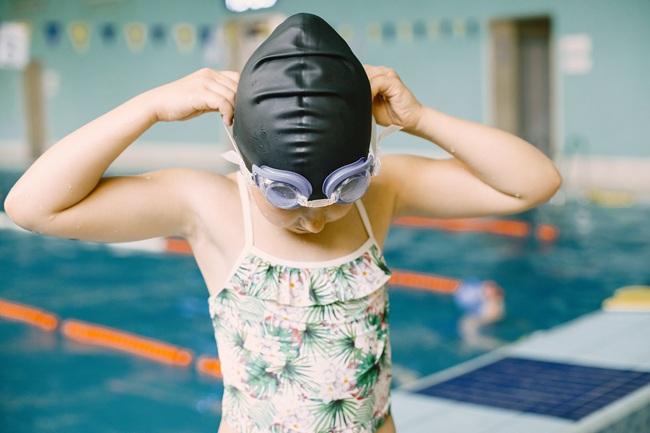
Swim schools have subtly adjusted to this new knowledge. Many now provide “water babies,” or parent-child classes that focus more on familiarity and bonding than technique. A ring of adults moving in unison, resembling a human version of a well-organized swarm of bees, will frequently be seen during these sessions, gently supporting infants as they glide, splash, and cling. Although the choreography appears straightforward, it is the result of years of fine-tuning teaching techniques that emphasize trust, body awareness, and safety cues. The structure is especially creative in the way it helps parents and kids alike, giving adults self-assurance alongside their kids.
Olympic champions like Becky Adlington have embraced this early childhood movement by implementing programs that view swimming instruction as an essential childhood skill rather than a specialized athletic route. Her SwimStars program, which was created from the viewpoint of an elite athlete and implemented in regular recreation centers, has received recognition for being remarkably effective and approachable. Instead of focusing on medals, it aims to transform non-swimmers into capable, self-assured kids who can eventually choose between surfing, triathlons, competitive clubs, or just safe seaside vacations.
Sobering statistics underpin the urgency of all of this. One of the most frequent unintentional causes of death for children is drowning, and recent national reports from some nations have indicated an increase in drowning rates rather than a decrease. The horrifying increase in risk that occurs shortly after a child’s first birthday and again during adolescence, when independence increases more quickly than skill levels, has been brought to light in Australia by Royal Life Saving. Millions of lessons are thought to have been lost during the pandemic, and those lost hours are now reverberating through rivers and beaches where teenagers who lack basic endurance or self-rescue skills are confronted with currents for which they are ill-prepared.
This gives parents a clear picture. Early start is not merely a nice-to-have; it lays the groundwork for future success, which must be sustained throughout elementary school and, ideally, renewed prior to adolescence. According to one swim instructor, this gives kids “two doses” of safety: the first during early childhood, when they learn the fundamentals of floating, turning, and reaching safety, and the second around age ten or eleven, when stronger strokes and endurance become incredibly dependable allies for the more challenging adolescent years. According to this perspective, early education is more of a long-term immunization strategy against avoidable tragedy than a box to be checked.
Families also discuss the more subtle advantages with almost surprising warmth. That one half hour when everything else stops and the only task is to be there with their child in the water is the focal point of many parents’ stories about their week. The pool transforms into a vibrant, reverberating cocoon that ensures touch, laughter, and eye contact. A regular swim class becomes scheduled bonding time that doesn’t require screens, toys, or elaborate planning, which is especially helpful for parents who feel guilty about the rush of modern routines.
Teachers are just as aware of the emotional shifts as the technical ones. After a few months, a child who came crying and clinging might be the one who cheers the loudest for others when they master a new skill. While nervous parents find themselves unwinding as they witness incredibly dependable safety habits developing in real time, shy toddlers discover their voices as they shout “look at me” from the stairs. With time, the lesson evolves from a purely defensive strategy into a quiet, continuous confidence project with repercussions that extend to playgrounds, classrooms, and family vacations.
For many families, access and cost are still major obstacles; in this regard, community pools, public health initiatives, and scholarships are essential. Recognizing that every child who learns to swim represents one minor but significant decrease in future emergency call-outs, some councils and charities have implemented subsidized spots. These programs are extremely effective public safety measures that gradually reduce the strain on rescue services and healthcare systems; they are not charitable in the sentimental sense. Additionally, they provide opportunities for kids to pursue careers in the water, such as coaching or lifeguarding, which extends the advantages into adulthood.
There is a growing consensus among experts, educators, and families regarding whether teaching children to swim at a young age is actually safer. Early lessons significantly improve a child’s chances, but they do not provide magical protection, and constant supervision near water is always unavoidable. They develop brains that remain more composed under pressure, bodies that can float, and instincts that guide young swimmers toward safety rather than panic. That combination, which begins with a young child, a patient teacher, and a pool that grows more familiar every week, is not only comforting but also subtly life-saving in a hectic and frequently distracting time.
| Key Information | Details |
| Core Question | Are kids safer when they learn to swim early? |
| Safety Insight | Early lessons have been shown to significantly reduce drowning risk, especially for toddlers. |
| Recommended Start | Gentle water exposure from babyhood; many experts suggest formal lessons starting at age 1. |
| Key Benefits | Water safety, motor skills, cognitive gains, confidence, social bonding, emotional regulation, fitness habits. |
| Main Risks of Delay | Higher drowning rates between ages 1–4; sharp increases during teenage years when skills were never fully developed. |
| Typical Early Skills | Floating, breath control, turning back to the wall, safe entries, early strokes, basic self-rescue actions. |
| Social Trend | More parents, educators and celebrities treating swimming as a life skill rather than a recreational hobby. |
| Supporting Research | American Academy of Pediatrics, Royal Life Saving, Griffith University and major swim programmes. |
| Reference Link | https://www.healthychildren.org |
What Makes Swimming the Best Sport for Children?
Parents who enroll their kids in swimming programs frequently do so for straightforward reasons, such as wanting them to be safe while on vacation, but they soon see improvements that go well beyond simply eliminating the need for armbands at the hotel pool. Swimming functions as a deeply layered training ground for body, mind, and character, often proving remarkably effective where other sports only scratch the surface. This has been highlighted in recent years in discussions with coaches, pediatricians, and researchers.
Physical differences are often the first obvious distinction for many families. Swimming is especially helpful for kids who might find high-impact sports uncomfortable or intimidating because it works nearly all of the major muscle groups in a single session while also providing gentle support for developing joints. Parents who observe from a distance frequently compare the pool to a kind of amiable resistance band that envelops the body and gives constant feedback with each kick and stroke. Continuous motion can be much more effective than stop-start field games at simultaneously increasing strength, flexibility, and stamina.
Health organizations like Virgin Active and Nuffield Health have frequently noted over the past ten years that swimming strengthens the heart and lungs in a way that feels enjoyable rather than taxing. A child who would grumble bitterly about running laps will frequently gladly spend an hour racing friends or chasing diving sticks, expelling energy virtually undetected. Coaches are aware of this and frequently create sessions that appear to be games but are actually planned aerobic exercises that progressively increase endurance in a fun and supportive environment.
The fact that swimming serves as a safety net is what makes it so alluring. The skills kids learn in the pool can literally save their lives, unlike many other sports. They acquire essential survival skills that lower risk in bathtubs, rivers, lakes, and pools by learning to float, tread water, and reach the side. Swim England’s campaigns have highlighted how water competency and ongoing supervision can significantly reduce drowning incidents, especially among younger children who are naturally curious and surprisingly quick on their feet. These efforts are supported by data and heartfelt testimonials.
In addition to improving muscles and safety, swimming appears to improve mental acuity in ways that teachers see in the classroom and parents notice at home. According to Griffith University research, children who regularly swim from a young age exhibit significantly better language, memory, and early math skills than their peers who spend less time in the pool. The explanation is elegantly straightforward: swimming requires balance, breathing, arm and leg coordination, and other bodily functions, making it a sort of full-body puzzle that keeps both sides of the brain working. This ongoing integration seems to promote improved focus and problem-solving over time.
Coaches witness brief but significant instances of this cognitive effect in action. Once having trouble following two-step instructions, a child can now handle complex sets that involve distance, breathing patterns, and stroke changes. After a term or two of lessons, parents frequently report that their children’s homework struggles become a little easier, that they pay more attention at the dinner table, and that their patience increases in ways that seem related to the discipline they learned in the pool. Rarely are these changes abrupt and drastic; instead, they are gradual advancements that are remarkably similar to the development of reading fluency.
Swimming provides a regular area for emotional relaxation, which is something that many modern kids sorely need. Through the release of endorphins that reduce stress and help restore frazzled moods, rhythmic movement, quiet submersion, and repetitive patterns function as a kind of moving meditation. Children come wired from school or screens, but they leave calmer, happier, and much more settled, according to coaches. The pool’s predictable sensory environment, which offers structure without excessive noise or chaotic contact, can be especially calming for nervous or neurodivergent kids.
In terms of social interaction, the pool produces an intriguing fusion of personal and group experiences. Youngsters learn to wait their turn, support teammates, and deal with small setbacks like being passed or having to repeat a drill by sharing lanes, equipment, and challenges. They almost unconsciously learn social skills from these common experiences, forming friendships through habit rather than coerced small talk. According to Swim England’s research on preschool swimming, parents rated these sessions as incredibly evident moments of joy and bonding that strengthened the parent-child bond as well as peer relationships.
The weekly swim session turns into a safe haven for many families, akin to a regular date night. When a parent rushes from work, their phone stays in their bag and their focus shifts to watching their child slice awkwardly and then more smoothly through the water. As she observed her child’s confidence increase slightly with each duration, one mother referred to those thirty minutes as her “weekly reset,” an opportunity to be totally present. Repetition of that minor ritual over several months can have a remarkable effect on a child’s and adult’s sense of stability.
Swimming has risen in popularity among kids’ sports thanks in part to celebrity endorsements. Olympians like Becky Adlington talk fervently about swimming as a means of achieving medals as well as a basis for resilient, healthy lives. Thousands of kids have received a structured path from basic water confidence to strong, dependable strokes thanks to her SwimStars program, which is based on clear milestones and entertaining rewards. She has combined elite skill with regular family life by making swimming seem both aspirational and surprisingly approachable through her public sharing of her journey.
In actuality, one of swimming’s subtly potent benefits is accessibility. It accepts kids with special needs and kids who don’t understand traditional team sports, kids with endless energy and kids who prefer more relaxed settings, and kids who love competition and kids who don’t. It can seem almost magical how the water levels the field. In a medium that works better for them, a child who finds it difficult to keep up on the playground may glide effortlessly in the pool and develop a new identity as “strong” or “fast.” When it comes to developing long-term self-belief, that change in self-image can be especially creative.
Swimming also opens doors to a more adventurous life as kids get older. Strong swimmers can pursue new interests that keep them active long after their school sports days are over, such as water polo, surfing, snorkeling, kayaking, or triathlons. Whether at a beach party or a camping trip with friends, parents frequently talk about how comforting it is to know their adolescent has the ability to remain composed and competent in open water. In this way, swimming is a very resilient investment; once mastered, it seldom completely vanishes, even after years without formal training.
Swimming, of course, requires consistency, just like any other discipline worth mastering. Lessons that are offered all year round, as opposed to just in the summer, help skills stick and confidence remain high. Coaches discuss how breaks can weaken resilience and technique, particularly in younger kids who are still developing muscle memory. Families that persevere through the gloomier, colder months frequently discover that their kids return to holiday pools with a fluency that appears natural to family members but was quietly developed over many typical evenings.
A similar conclusion is frequently echoed by parents who have considered multiple sports options. Football can foster teamwork, gymnastics can improve flexibility, and martial arts can instill discipline, but swimming combines all of these advantages with the unique ability to save lives. It is difficult to argue against a sport that strengthens the heart, increases focus, promotes mental health, and teaches kids what to do if they fall into deep water by accident. Many people find that combination to be decisive as well as persuasive.
Swimming has been subtly emphasized as one of the most well-rounded solutions available in recent years as discussions about children’s health, digital habits, and emotional resilience have heated up. It is both structured and lighthearted, demanding and forgiving, private and communal. The pool offers something refreshingly straightforward to a generation growing up surrounded by distractions: specific objectives, observable progress, and the sense of liberation that comes from swimming with assurance. Swimming may be the greatest sport for kids for that reason more than medals or records and it’s a gift that will continue to give long after they first set foot in the pool.
| Key Information | Details |
| Topic | What Makes Swimming the Best Sport for Children? |
| Core Benefits | Full-body fitness, water safety, emotional balance, cognitive development, confidence, social growth |
| Why It Stands Out | Low-impact, inclusive, year-round, suitable for different ages and abilities |
| Notable Research | Griffith University, Swim England, American Academy of Pediatrics, Nuffield Health |
| Trend Insight | Growing number of parents choosing swimming as a first sport for health, bonding and safety |
| Life Skill Value | Prevents drowning, teaches survival techniques, supports independence around water |
| Celebrity Influence | Supported and promoted by Olympians like Becky Adlington and elite swim programmes |
| Broader Impact | Supports mental health, academic success and long-term healthy habits |
| Reference Link | https://www.swimming.org |
How Can Parents Help Kids Feel Confident in the Water?
The “maybe” kids, the ones strapped around a parent’s neck like a safety harness and watching other kids cannonball like a cacophonous swarm of bees, are easy to spot on practically any busy Saturday at a public pool. Uncertain of whether the water is a threat or an invitation, their gaze darts between the steps and the chaos. The answer, according to swim instructors, begins much earlier and much gentler than many people believe. More parents are asking these days not only how to keep their children safe but also how to help them feel truly confident in the water.
Long before anyone puts on goggles, bath time is frequently when the real work starts. Parents can significantly influence their child’s attitude toward water by transforming the tub into a small practice pool. Children can experiment with splashing, pouring, and dripping without feeling overwhelmed by colorful cups, tiny watering cans, and well-known bath toys. Parents are already subtly and steadily boosting their child’s confidence when they resist the temptation to wipe every drop from their face. Teachers have emphasized time and time again over the last ten years that kids who are allowed to play freely in the bathtub show up to formal classes noticeably more at ease.
A parent’s tone is very important. Children are forensically accurate at reading adult behavior. A father who constantly warns of danger or a mother who flinches whenever water touches her hair conveys the idea that water is something to be endured rather than enjoyed. A parent, on the other hand, becomes a living example of how water can be joyful and safe when they wade in calmly, laugh when they get splashed, and clearly enjoy themselves in the pool. According to one coach, she can usually tell which kids have strong role models because their development is frequently much quicker not because they are naturally braver, but rather because the adults in their lives are giving them reassuring, consistent cues.
In order to help a child who is anxious, “swimming” must typically be broken down into small, manageable chunks. Good educators and considerate parents take small, manageable steps rather than jumping from a dry poolside to complete submersion. Sitting on the edge and kicking could be the first step, followed by blowing bubbles in the water with just your lips, cheeks, and nose tip. Every step is an opportunity to provide praise that is incredibly explicit and precise: “You tried putting your mouth in today, that was brave,” as opposed to generalized “good job” remarks that pass by kids without making much of an impression.
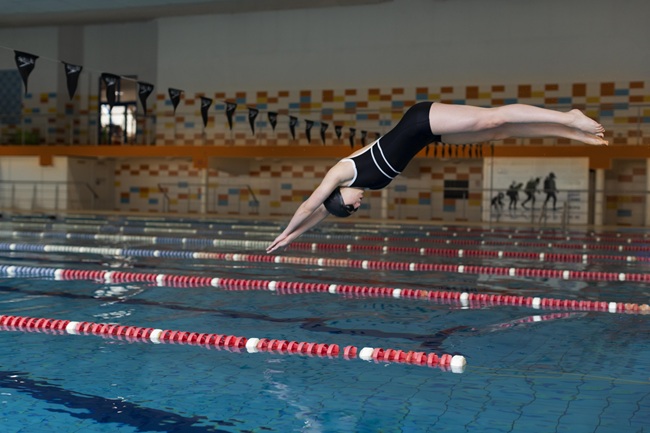
When used effectively, toys can be very effective tools for boosting confidence. Little floating balls entice children to reach, paddle, and stretch, while sinking rings and dive sticks provide a tangible incentive to go a little deeper. One swim instructor referred to her classes as “treasure hunts disguised as training,” which is remarkably similar to what parents can do at the pool on a calm afternoon. Adults can encourage children to go farther without lecturing or pressuring them by using playful challenges, allowing curiosity to do the majority of the work.
Getting their eyes in is the most difficult obstacle for many children. For weeks, kids will happily blow bubbles, but when someone suggests putting their face under, they freeze, according to teachers. If given at the appropriate time, goggles can be especially helpful. When given the opportunity to select her own pair of shoes adorned with her favorite movie characters, a young swimmer who was afraid of the water changed almost instantly. Her anxiety significantly decreased as a result of her parents and coach turning an intangible fear into a manageable issue by incorporating that small element of control and enjoyment.
Programs that intentionally support child-led learning have produced some of the most encouraging advancements. Teachers who have shifted from strict, checklist-based lesson plans to adaptable, creative sessions report that anxious kids thrive when given the freedom to make decisions. While his sister prefers to practice floating on a noodle, a young boy might decide that today is the day to jump. Instructors streamline progress and free up emotional energy that would otherwise be used for resistance by strategically integrating necessary skills into the game that the child enjoys.
Additionally, parents must realize that confidence is rarely linear. After a restless night, a cold, or an unexpected noseful of water this week, a child who joyfully covered their face last week might cling tightly. For swimmers in the early stages, their current mood is just as important as their technical abilities. The best parents remain flexible, assessing the current circumstance instead of dwelling on the performance from the previous week. Flexibility is not a luxury when it comes to children’s emotions; it is a necessary ability.
However, consistency cannot be compromised. The term “holiday effect” is used with almost comical admiration by swim instructors. Nervous swimmers frequently change in a few days while swimming every day on family vacations or during summer crash courses. Breathing steadies, practice becomes more fluid, and those initial hesitant glides abruptly develop into autonomous movement. Because the brain and body have less time to forget when exposure occurs strategically throughout the day, confidence is reinforced rather than needing to be rebuilt every week. When parents are able to schedule frequent visits, even brief ones, they frequently witness progress that feels much faster than when there are sporadic dips.
Recognizing fear rather than ignoring it is a crucial component that is frequently missed. Telling a child “there’s nothing to be scared of” can inadvertently make them feel misinterpreted or even stupid, according to psychologists who work with anxious children. “It makes sense that you feel nervous, water can be strange at first, but I’ll stay right here and we’ll do it together,” sounds like a more helpful strategy. Over time, this balance proves to be remarkably effective as it validates the emotion while still encouraging action.
Swim schools that cater to young or nervous swimmers typically incorporate this empathy into every aspect of their curriculum. Many provide low ratios, warm-water pools, and soothing instructors who are qualified to spot overwhelm symptoms before a meltdown occurs. They give kids a sense of predictability that lowers anxiety by using songs, rhymes, and basic rituals to indicate what will happen next. Children who previously refused lessons have now become eager participants, and parents report feeling noticeably more supported since the introduction of more of these child-focused models.
The dynamics of the family are also important. Youngsters watch their friends and siblings closely, and their bravery is often infectious. It can be a surprisingly effective motivator to watch a slightly older cousin jump into the shallow end, surface smile, and demand another turn right away. This effect is harnessed by group games like “fishy in the middle” and starfish tag, which transform the pool into a shared adventure rather than an individual performance. Many reluctant swimmers eventually overcome their reluctance because they want to participate in the fun.
In all of this, there is another, more subdued tale: parents dealing with their own aquatic ghosts. Some adults bring their own kids to the pool because they remember being thrown into deep water or being made fun of for crying in class. It takes more than just the child’s confidence to decide to do things differently, such as listening intently, starting slowly, or being patient with regression. It can also be therapeutic for the parent, demonstrating that learning something that previously seemed harsh can be done in a more compassionate and efficient manner.
| Key Point | Details |
| Core Question | How can parents help kids feel confident in the water and actually enjoy being there? |
| Best Starting Place | Gentle play in familiar, shallow settings such as the bath, paddling pools, and the shallow end with you close by. |
| Parent’s Role | Calm, patient role model, using positive language, relaxed body language and zero shaming or forcing. |
| Confidence Tools | Toys, songs, goggles, fins, noodles and floating aids used to support gradual independence, not replace it. |
| Skill Progression | From splashing and bubbles to face in, breath control, floating, gliding and simple swimming movements at the child’s pace. |
| Emotional Focus | Acknowledge fear, validate feelings, celebrate tiny wins, keep sessions short, warm and fun rather than pressured. |
| Consistency | Regular family swims, repeat bath-time water play, and, when possible, holiday crash courses to reinforce skills. |
| Professional Support | Child-led, small-group swim schools with patient teachers who understand anxiety and build trust slowly. |
| Big Long-Term Goal | A child who sees water as familiar, manageable and exciting, with significantly reduced risk around pools and open water. |
| Reference Link | https://www.swimming.org |