
Why Water Skills Are Becoming a Key Part of Future Ready Kids in Modern Families
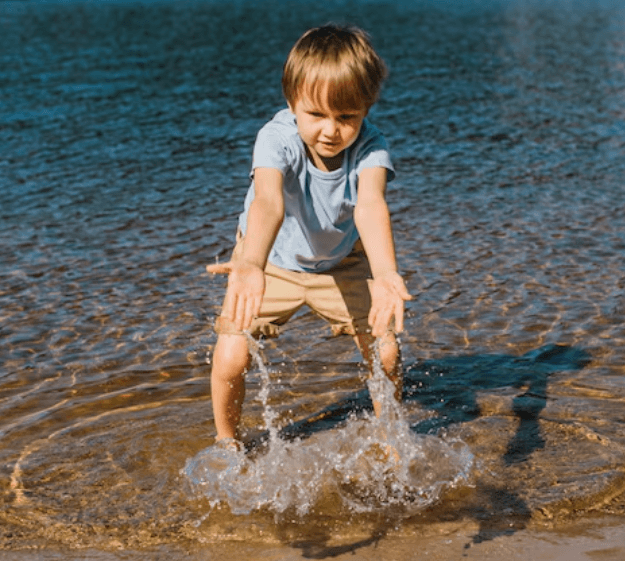
It wasn’t a dramatic moment when I realized something had changed. A group of kids pressed their faces against the fence during a hot afternoon school pickup near a public pool, uncertain if they were permitted entry without an adult who could swim well enough to watch over them.
Swimming was considered an odd childhood skill for many years. Good to have. seasonal. frequently delayed. Families thought children would eventually “pick up” skills like riding bikes or climbing trees. Water skills are no longer considered extracurricular.
| Context | Key Facts |
|---|---|
| Drowning risk | One of the leading causes of accidental death for children aged 1–14 worldwide |
| Early learning | Foundational water skills include floating, breath control, and orientation |
| Development | Swimming supports motor coordination, cognitive focus, and emotional regulation |
| Access gap | Formal swimming opportunities often decline after early school years |
| Lifelong relevance | Water competency is linked to safety, confidence, and physical literacy |
They are beginning to infiltrate the areas that were previously designated for emotional intelligence, digital literacy, and reading readiness. Parents discuss them with the same urgency. Schools argue over whether or not they should be included in the curriculum. Communities take access gaps more seriously.
Blunt reality plays a part in this change. More often than we would like to acknowledge, children live close to bodies of water: backyard pools, apartment buildings, recreational rivers, and beaches that are only a day’s drive away. The statistics have a way of penetrating denial, and even short-term exposure carries risk.
However, the discussion has expanded beyond safety. You can see it if you pay close attention to a beginner swim class. When a child learns to float, they are also learning orientation, or how to get back on their feet when they lose their balance. Breath control turns into a patience lesson. In a way that worksheets can never fully capture, waiting for a turn at the pool edge reflects classroom discipline.
Water play has long been considered a form of sensory enrichment in early childhood settings. Pouring, scooping, and sensing temperature variations. The fact that those moments are now purposefully connected to future preparedness rather than current entertainment is novel.
That reasoning is expanded upon in swimming lessons. They ask kids to follow directions, move their bodies in three dimensions, and handle minor discomfort without losing their cool. It’s more uncommon than it seems to have that combination.
In private, a lot of teachers observe that today’s kids lack the physical self-assurance of earlier generations. less climbing. less unstructured playtime outside. More caution, more screens, fewer chances to test limits.
Passivity is not possible in water. Engagement is necessary. Children need to relearn how their bodies function because the pool is one of the few places where gravity behaves differently. In ways that land-based activities don’t always, that recalibration improves coordination.
Benefits to cognition come as a result, not as a miracle. When sequences are important, memory gets better. When listening is essential for safety, attention becomes more focused. When a child discovers a way to reach the wall without getting up, they are demonstrating problem-solving skills.
Social dynamics also change. Collaboration is a requirement of group lessons. Youngsters quickly pick up the lessons that waiting is important, that encouragement crosses boundaries, and that splashing upsets other people. Handling space and supporting a classmate’s first unassisted float are examples of small gestures of empathy that become commonplace.
That knowledge is silently carried into other areas by a child who used to cling to the instructor’s arm but now pushes off by themselves. When students raise their hands more frequently, teachers notice it. After setbacks, parents hear it in more composed voices.
I recall thinking about how familiar that choice felt outside of the water as I watched a child pause at the edge of the pool, hesitate, and then jump. There is a certain type of confidence that is developed in water. It’s not very noisy. It is more stable.
The patterns of the climate are changing. Heatwaves have a longer duration. Recreation on the water is becoming more common and less optional. Public pools and splash areas are becoming more and more integrated into urban planning as cooling infrastructure.
Families are simultaneously dealing with the unequal distribution of access to swimming pools. Money is spent on lessons. Facilities age poorly or close. Even though they are surrounded by water all their lives, some kids never learn how to safely navigate it.
The claim that water skills belong in the category of essential education rather than private enrichment is strengthened by this injustice. Additionally, parents are now talking more candidly about a psychological aspect.
Water has the ability to regulate. Some kids find that the constant resistance, breathing rhythm, and all-encompassing sensory input help them relax in ways that few other activities can. Swimming can be empowering and grounding for children who struggle with anxiety, attention issues, or sensory sensitivity.
That does not imply that it is simple. Fear is a necessary part of learning to swim. immersion. Have faith. letting go of firm ground. Youngsters must face vulnerability early, often, in small doses, and with assistance.
Avoidance does not build resilience. It develops through mastery and safe exposure to challenge. A pure, honest version of that process is provided by water. Parents who used to focus mostly on stroke technique now discuss self-control and emotional resilience. After weeks in the pool, they observe how children behave differently.
Due to liability and logistical constraints, schools are slower to adapt. However, the discussion is ongoing. Is swimming better suited for literacy support or physical education? Should it be required, funded, or evaluated? Twenty years ago, these questions would have seemed extreme.
The term “future readiness” has become overused and crowded, frequently losing its meaning. However, when you take a closer look, it comes down to flexibility. the capacity to react when circumstances shift, equilibrium is lost, or new regulations are required by the environment.
That’s precisely what water skills teach. They don’t take the place of education or technological proficiency. By enhancing the body-mind connection that underlies learning itself, they support them.
Children who move with assurance in the water are more likely to believe in their ability to learn other challenging skills. With practice, they have experienced a decrease in fear. They’ve seen advancements measured in inches rather than cheers.
It is becoming more and more valuable to have that quiet competence. Water is stubbornly honest even as childhood gets faster in some places and narrower in others. Shortcuts are not rewarded. Age and background are irrelevant to it. It only reacts to respect, skill, and attention.
Maybe that’s why swimming is gradually and quietly being rethought as a preparation rather than a recreational activity. Not to compete. Not to be flawless. For a future in which kids are supposed to remain afloat when the ground changes beneath them, both literally and figuratively.