
Why Swimming Helps Children With Boundaries and Self Control Naturally
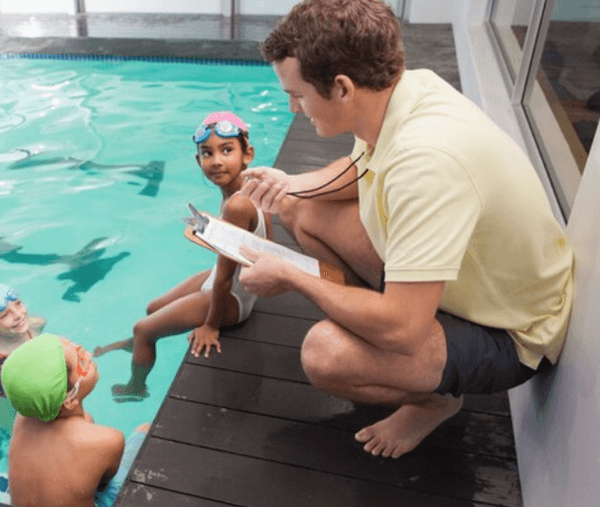
At a swimming pool, rules are announced right away, and they do so in a way that is very obvious to kids, who immediately understand that running, yelling, or jumping ahead will have swift and unobtrusive consequences.
The pool operates with remarkably similar expectations each visit, teaching kids that boundaries are there to keep everyone moving safely and predictably, not to restrict them like they would in many other settings where boundaries are negotiable.
Because water reacts to behavior honestly and rewards calm, controlled actions with advancement while pushing back against frantic movement, it becomes the most persuasive teacher.
| Context Area | Key Information |
|---|---|
| Typical age range | Early childhood through adolescence |
| Core skills shaped | Emotional regulation, impulse management, body awareness |
| Learning environment | Structured, rule-based, sensory-rich |
| Teaching method | Repetition, calm correction, gradual mastery |
| Observed outcomes | Notably improved focus, patience, and behavioral consistency |
Before anything else, swimming requires children to control their bodies, which is especially helpful for kids who find it difficult to slow down, pay attention, or wait patiently.
At the pool’s edge, I’ve seen restless kids become surprisingly quiet. They lean forward, their eyes fixed, and pay attention to directions with a noticeably better level of focus than they would in a classroom.
Swimming boundaries, which are defined by painted lines, lane ropes, and obvious signals, help kids understand personal space in a way that is rarely accomplished by words alone.
Children learn that self-control is not an abstract virtue but rather a useful tool that can help them move farther with less effort by following movement patterns like kick, pull, and breathe.
Since many kids push boundaries by splashing early or jumping ahead, early resistance is common. However, the pool consistently reacts, confirming that impatience actually slows rather than speeds up progress.
For children who need stability, teachers create a very dependable and emotionally predictable environment by modeling calm authority through repetition and correcting behavior without using loud voices.
Children eventually start to pause before acting and anticipate boundaries without being reminded. This change is frequently described by parents as surprisingly affordable because it doesn’t require lectures or intricate reward systems.
Additionally, swimming is a very effective way to channel energy because the water resistance evenly wears down muscles, which greatly reduces excess restlessness that frequently leads to impulsive behavior elsewhere.
Children can benefit greatly from the sensory pressure of water wrapping around their bodies, which gives them feedback that feels calming rather than overwhelming.
Errors occur frequently turns are missed, goggles slip but the response is consistent, demonstrating that mistakes are a necessary component of learning rather than causes for shame or retreat.
I recall thinking about how infrequently that kind of patience appeared outside the pool as I watched one especially impetuous child wait silently for a whistle with hands folded and eyes steady.
Since every child can directly feel how their decisions impact their breathing, balance, and momentum, swimming places the onus of responsibility squarely on the individual and demands accountability without placing blame.
As kids learn to share lanes, wait turns, and respect space skills that transfer easily into classrooms and playgrounds social boundaries grow alongside physical ones.
Swimming requires gradual, sometimes exasperatingly slow progress, but this pace instills a tolerance for discomfort and emphasizes that mastery is achieved through consistency rather than quick fixes.
Weekly repetition of the lesson rhythm creates a stabilizing routine that is especially inventive in its simplicity and provides structure without rigidity.
Beyond the pool, parents often report improvements, such as better listening at home and better emotional control in situations that used to escalate quickly.
Swimming does not guarantee change right away, but it does help children develop self-control as a skill that they can confidently apply to everyday situations by setting clear boundaries, providing constructive criticism, and encouraging calm repetition.