

Some kids experience a specific kind of anxiety the night before school begins. It’s not loud or dramatic. It’s the silent refusal to eat dinner, the third glass of water before bed, and the regular Sunday night stomach ache. Even when they are unsure of what to do, parents are able to identify it right away. Surprisingly, more and more of them are discovering some of the solution at the edge of a swimming pool rather than in a therapist’s office or a mindfulness app.
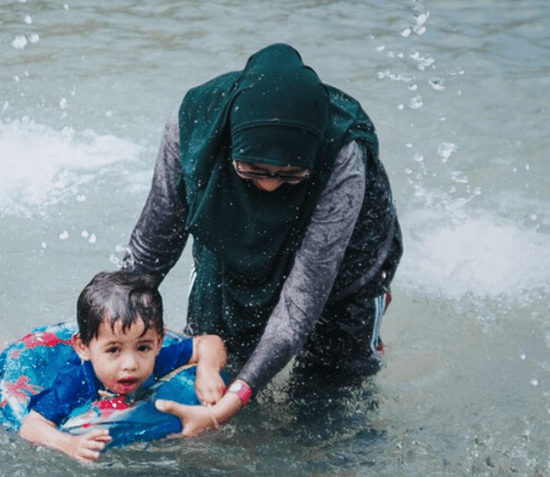
Published in September 2025 as part of Swim England’s sixteenth wave of data collection, new research from the #LoveSwimming campaign lends some credence to what many parents had long suspected. After swimming lessons, 84% of parents said their child’s mood significantly improved. Lessons helped lessen their child’s stress or anxiety, according to nearly eight out of ten working parents. Additionally, nearly 75% of parents thought swimming directly improved their child’s academic achievement. These figures are not marginal. They imply more than just a coincidence.
Leon Taylor, a silver medallist in diving from the 2004 Summer Olympics in Athens, discusses this as a father rather than a former athlete. Taylor has seen firsthand what the water seems to do for his five-year-old son Ziggy, who regularly attends swimming lessons. “It’s incredible to see how much confidence and calm he gains from being in the water,” Taylor said. Those are just some of the qualities he’s gained from swimming and he carries them into everything else he does.” Hearing that from a man who competed in water sports throughout his career is telling because he understands the distinction between physical performance and something more subtle and difficult to quantify.
| Detail | Information |
|---|---|
| Organization | Swim England |
| Campaign | #LoveSwimming |
| Research Wave | Wave 16 |
| Published | September 23, 2025 |
| Key Statistic | 84% of parents report mood improvement after swimming lessons |
| Focus | Children’s mental health, school anxiety, emotional wellbeing |
| Notable Contributor | Leon Taylor – Olympic silver medalist, Athens 2004 |
It’s worthwhile to inquire as to why water appears to have this effect on kids. A portion of the response is physiological. The hormones that control mood, endorphins and serotonin, are released during swimming in ways that many other types of exercise just don’t match. Additionally, immersion in water improves oxygen delivery to the brain, enhancing memory, focus, and emotional control. Even thirty minutes in the pool can improve sleep patterns, lower stress levels, and lessen quantifiable symptoms of depression and anxiety, according to studies. That’s a big assertion. However, the science is sound.
The breathing comes next. The first thing we tell someone who is in a panic is to breathe, even though it may seem almost too obvious to say. Conscious, rhythmic breathing becomes indispensable when swimming. It is required by every stroke. Nothing else functions without breath control, which is one of the first skills taught in structured lessons.
Learning to control breathing in the water to trust it, to repeat it, to rely on it quietly teaches an anxious child a skill that they can immediately apply to stressful situations on land. Something akin to a meditative state is produced by the repetitive stroke pattern and that deliberate breathing. It’s possible that the pool serves as a hybrid of a gym and a haven due to the unique tranquility of the water and the subdued sensory environment beneath the surface.
Additionally, there is the social component, which is often overlooked. In group lessons, kids are paired with classmates who are traveling through the same uncharted territory, sharing the same small victories and fears. Compared to purely social situations, shy kids frequently find it easier to connect around a common challenge. In the meantime, teachers develop into dependable adults who provide support in a controlled but low-stakes setting. Once established by the pool, that trust appears to spread. Youngsters who are used to getting help, taking risks, and bouncing back from setbacks in the water seem to bring a similar level of confidence into the classroom.
According to Alex Barrett, Senior Technical Aquatics Manager at Swim England, “Swimming teachers see it every day children leave the pool happier, more focused and ready to take on challenges.” The consistency of this observation is more noteworthy than the assertion itself. Teachers in various programs and environments are observing the same thing. It is difficult to write off such a pattern as anecdotal.
It is important to remember that children’s anxiety is not a rare problem. The CDC reports that slightly more than 10% of kids have been diagnosed with stress or anxiety, and that percentage has been steadily rising. The years after the COVID-19 pandemic exacerbated an issue that was already getting worse.
Children experienced the disruption of routine, absorbed the stress in their homes, and frequently came out of lockdowns with emotional scars that regular school life has found difficult to heal. In many areas, pediatric mental health services are overburdened, and parents are frequently left searching for useful, easily accessible resources while they wait for something more official.
It turns out that swimming fulfills many requirements. It is social, accessible, offers physical effort without violence, and produces quantifiable outcomes. According to research from the Griffith Institute for Education, young swimmers achieve cognitive milestones such as oral expression, literacy, numbers, and visual motor skills earlier than their peers. It seems as though the discipline needed to learn in the water listening, practicing, and being patient with one’s own body quietly prepares the brain for the rigors of formal schooling.
Reducing all of this to data still leaves something unfinished. The statistics from Swim England are convincing, but what sticks in your mind is the picture of a child emerging from the water after a lesson, their hair flattened, breathless, and already searching for their parent, with an expression that is difficult to describe but instantly identifiable. It’s not quite a victory. It is more in line with relief. the unique sense of relief that comes from completing a difficult task in a cooperative body. It’s possible that a child experiencing Monday morning dread is doing more than anyone can yet fully comprehend.
i) https://www.wiltshire.gov.uk/article/14822/New-research-highlights-the-powerful-benefits-of-swimming-for-children-s-wellbeing
ii) https://www.swimming.org/justswim/swimming-lessons-benefit-children-beyond-pool/
iii) https://www.bearpaddle.com/swimming-blog/the-mental-benefits-of-swimming-7-ways-swim-lessons-support-your-childs-emotional-wellbeing/