
Why Kids Who Swim Tend to Develop Better Motor Planning Skills Over Time
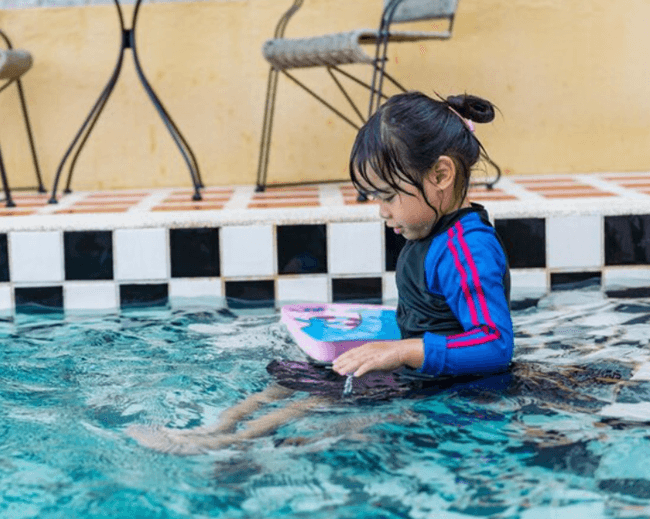
When observing young swimmers closely, the first thing that strikes one is not their speed or endurance but rather the deliberate way they move, pausing momentarily before acting and adjusting their bodies with a calmness that seems almost methodical, much like how a skilled craftsman assesses a task before making the first cut.
When a child knows what they want to do but struggles to coordinate their body to make it happen, they may hesitate in the middle of an action or give up completely. This is an example of motor planning going awry, leaving them frustrated and unsure of why the effort feels more difficult than they had anticipated.
| Aspect | Key Information |
|---|---|
| Motor planning | The brain’s ability to organize, sequence, and execute physical actions |
| Typical age range | Infancy through late childhood |
| Research insight | Children in swim programs often reach motor milestones months earlier |
| Environmental factor | Water adds resistance, sensory feedback, and balance demands |
| Research source | Griffith Institute for Educational Research, Australia |
Swimming fills that gap in a particularly helpful way because it requires children to think ahead physically before committing to an action, be it a kick, a turn, or a breath. Water provides resistance that does not forgive impulsive movement.
Because aquatic environments combine movement, balance, and sensory feedback in one setting, they have drawn more attention from developmental specialists in recent years. These environments create conditions that are remarkably effective for teaching the brain how to plan motion rather than just react.
When a child enters a swimming pool, they soon discover that flailing is ineffective. This lesson comes quickly and without passing judgment, pointing them in the direction of more composed, productive movements that are significantly enhanced with practice and gentle guidance.
A process that subtly develops anticipation, water pressure against the skin provides continuous information, and by pushing through it, kids get incredibly clear feedback that helps them understand how much force is required and when adjustments are needed.
Children tend to look more thoughtful in the pool than on a playground ladder because swimming eliminates the safety net that many movements on land rely on, making timing and coordination crucial for success.
Children must simultaneously align their heads, hips, and limbs when floating alone, which teaches planning. Through trial and error, they learn that even minor errors can ruin the entire endeavor a lesson that is quickly assimilated and retained.
Swimming necessitates bilateral coordination because arms and legs must alternate rhythmically, which promotes effective communication between the two sides of the brain. Research indicates that this pattern is highly effective for the development of complex motor sequences.
This coordination eventually transfers to everyday activities; parents have reported that children who swim frequently appear to pick up skills like riding bikes, handling scissors, and navigating crowded areas without constantly colliding much more quickly.
Because pools allow for depth, distance, and movement in multiple directions, swimming also helps children develop spatial awareness in a surprisingly inexpensive classroom. This is because it forces them to judge their body’s position in relation to walls, floors, and other swimmers.
We noticed that a hesitant child paused before pushing off the wall, and realized that hesitation was actually calculated rather than fearful
As children must incorporate breathing into movement, breathing adds another layer of planning that is especially creative, transforming what is instinctive on land into a deliberate sequence that improves timing and attention.
Studies show that children who learn to control their breathing frequently exhibit noticeably better focus in non-physical tasks that call for sustained attention, demonstrating that this integration supports broader cognitive organization.
Swimming can be very adaptable for kids with developmental or sensory issues. It provides structure without rigidity and repetition without monotony, making progress seem doable rather than overwhelming.
Because success is evaluated internally rather than competitively, the pool environment also lessens social pressure by letting kids focus on their own routines, which can be very effective in boosting confidence through mastery.
Swimming provides regular practice of planning and execution during early childhood, when neural pathways are developing quickly. This reinforces habits that become ingrained rather than consciously recalled.
Swimming teaches kids that careful planning frequently produces better results, a lesson that subtly molds behavior beyond mere movement, in contrast to certain activities that prioritize results over process.
These swimmers benefits continue after they dry off and go home, quietly changing the way they handle obstacles, plan their actions, and have faith in their ability to do so. This shows that swimming has accomplished much more than just teaching them a new skill.