
What is the Turtle Award Scheme for Young Swimmers?
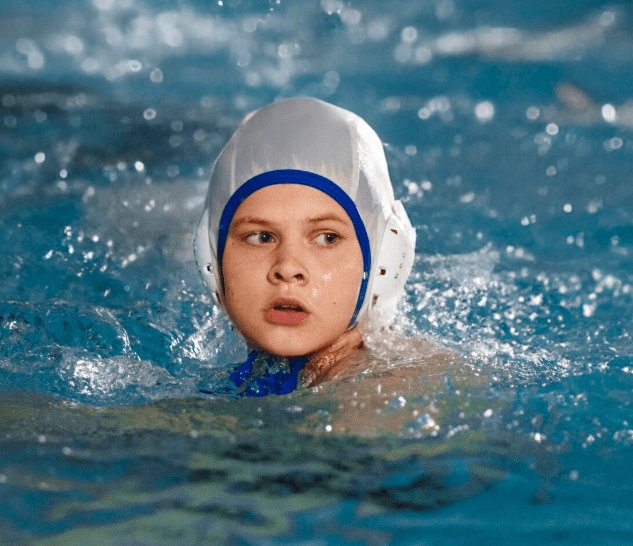
Early childhood development, safety education, and thoughtful design all come together in the Turtle Award Scheme for Young Swimmers, which creates a learning environment that is more akin to a guided adventure than formal instruction. This is especially advantageous for families who are introducing their young children to the water. The program avoids the rigidity that formerly characterized early aquatic education while being thoughtfully designed for young children who are just starting swimming lessons, such as infants, toddlers, and preschoolers.
For many years, swimming awards were based on a limited logic that prioritized distance, followed by technique, and assumed rather than developed confidence. By treating confidence as the beginning rather than the end, the Turtle Award Scheme subtly questioned that presumption. When a toddler learns to paddle five meters with gentle assistance or float calmly, they are not just crossing off a box; they are establishing neurological patterns of balance and trust that are significantly enhanced by repetition and positive reinforcement.
| Category | Information |
|---|---|
| Programme Name | Turtle Award Scheme for Young Swimmers |
| Target Age Group | Infants, toddlers, and pre-school children |
| Typical Age Range | Birth to approximately 5 years |
| Core Purpose | Building water confidence, safety awareness, and early swimming skills |
| Teaching Approach | Child-led, play-based, progressive learning |
| Key Skills Covered | Floating, basic propulsion, pool safety, breath control |
| Progression Pathway | Turtle levels to Duckling, STAnley, and ILSP stages |
| Recognition | Badges, certificates, medals with themed characters |
| Industry Alignment | Swim England Pre-School Framework and STA programmes |
Particularly when it comes to risky structured activities, parents have been pickier in recent years. For many families, water is associated with both opportunity and anxiety, which is remarkably consistent across cultures and societies. The Turtle Award Scheme directly addresses these worries by emphasizing safety skills like safe entry, poolside rules, and supported floating, providing comfort without stifling enthusiasm or curiosity.
The awards themselves are purposefully straightforward but have deep emotional resonance. Every level presents attainable objectives, frequently disguised as games or creative activities, enabling kids to make progress without feeling rushed. For instance, a Turtle medal that celebrates floating on the back reframes stillness as success a notion that feels surprisingly progressive in a culture that is frequently fixated on output and speed. Parental involvement is remarkably effective because the accompanying cue cards, which are full of fun exercises, extend learning beyond the pool.
Instead of functioning independently, the Turtle Award Scheme is part of a larger aquatic pathway by closely coordinating with the Swim England Pre-School Framework and the Discovery Duckling and Duckling Awards. From assisted experiences, children naturally transition to increased independence, setting them up for subsequent Learn to Swim stages and the International Learn to Swim Program. The drop-off rates that have historically beset early swim instruction are decreased by this incredibly dependable continuity.
The Turtle Award Scheme’s child-led philosophy reflects broader developments in early education. Swimming abilities do not develop according to a set schedule, much like language acquisition or motor development. While some kids accept submersion right away, others require weeks of assurance. Because of the scheme’s flexibility, instructors can react instantly and modify activities while maintaining a clear framework a highly effective and sensitive approach.
Due to increased awareness of water safety and early intervention, the private swim school industry has grown significantly over the last ten years. Turtle-based programs have distinguished themselves in that context due to their scalability and consistency. The Swimming Teachers’ Association’s multi-award recognition demonstrates how careful pedagogy can result in long-term business models by reflecting both operational excellence and teaching quality.
The Turtle Pack swimming aid serves as an example of how educational philosophy is supported by product innovation. The neoprene vest with detachable buoyancy panels, which was created to replace armbands and heavy floats, enables kids to keep their arms free and maintain a neutral body position, greatly lowering their reliance on artificial support. It feels especially creative and kid-friendly when teachers gradually remove buoyancy to help kids become independent without making sudden changes.
The Turtle Award Scheme gently modifies behavior in addition to technique. Children are prepared for group learning settings, such as swimming lessons at school, through activities that emphasize listening, taking turns, and obeying directions. Introducing brief independent activities while a parent stays close by fosters resilience and self-reliance, two traits that are useful outside of the pool. Teachers frequently observe that kids who advance through the Turtle levels exhibit noticeably better focus and flexibility.
The use of animal characters in the scheme goes beyond simple branding. Children are assisted in developing intuitive connections between movement and imagery by each creature’s representation of a real swimming characteristic. This approach is similar to early literacy storytelling strategies, where narrative promotes engagement and retention. Repetition becomes extremely versatile rather than tedious for young swimmers who visualize themselves as turtles or penguins.
The Turtle Award Scheme represents shifting perspectives on childhood risk in a larger social context. It promotes gradual exposure backed by knowledgeable adults rather than completely shielding children or pushing them too soon. This balance is in line with contemporary parenting theories that emphasize experience-based competence over avoidance, which has a positive, forward-looking outlook.
Links to more extensive aquatic programs, such as STA’s STARFISH and STAnley Awards, provide parents with observable indicators of advancement while bolstering credibility. Although they are presented as milestones rather than endpoints, certificates and badges offer concrete proof of accomplishment. This difference is important, especially for families navigating the crowded extracurricular activity scene.
Another indicator of workforce evolution is the Turtle Award Scheme for Young Swimmers’ widespread appeal. Flexible schedules and fulfilling work have attracted instructors and franchise owners from a wide range of professional backgrounds. Teaching children vital life skills gives them a sense of purpose that traditional service roles frequently lack, which promotes high retention and reliable instruction.
The Turtle Award Scheme has established itself as a benchmark for early aquatic education by working with national frameworks and consistently finding better ways to instruct very young learners. Its success indicates that learning that is gentle, structured, and emotionally intelligent produces safer and more durable results, giving kids a peaceful, self-assured relationship with water that can endure for decades.