

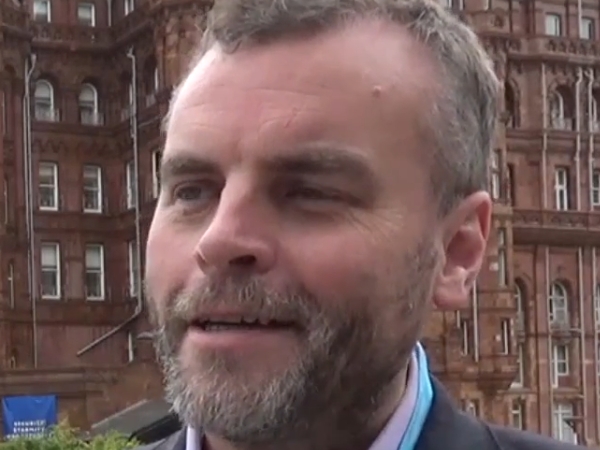
When British politicians take a step back from the spotlight, there’s a certain type of rumor that circulates online about their health, mental state whether or not something is “wrong”. It has also affected Tim Montgomerie, a former Conservative strategist and founder of ConservativeHome who is currently a suspended member of Reform UK.
Over the past few years, searches for “Tim Montgomerie illness” have subtly increased, partly due to his changing public persona and partly because political audiences occasionally confuse fatigue for something darker.
Based on all the information that is available to the public, the truth is that no serious physical illness has been diagnosed. No cancer. No neurological disorder. Montgomerie and his representatives did not issue an official statement indicating a serious health emergency. Even now, in political circles, mental health is something that “is” documented and that Montgomerie himself has discussed.
Montgomerie was candid about having emotional problems and depression during the COVID-19 lockdown. He talked about getting professional help, such as counseling, to deal with what was obviously an extremely difficult time.
The sudden stillness of lockdown seems to have struck hard for someone whose career had been built around relentless output running political websites, writing for major newspapers advising prime ministers. Really, it’s not shocking. Stillness is often the most unsettling state for people who move quickly.
His career has always been characterized by intensity, dating back to the late 1990s, when he wrote speeches for William Hague and Iain Duncan Smith. Before joining “The Times” as a comment editor, he spent almost eight years editing ConservativeHome, which he virtually single-handedly turned into one of the most read political platforms in the UK. The physical and psychological costs of managing audiences, navigating internal party politics taking in daily criticism are rarely recognized until the person in question chooses to identify them.
As Montgomerie’s political career took more dramatic turns, the health rumors became more prevalent. His brief tenure as social justice adviser to Boris Johnson in 2019 came to an abrupt end. His creation of the online magazine UnHerd came to an end when he announced his departure on Twitter in September 2018 with his usual directness.
In December 2024, he completely left the Conservative Party and joined Reform UK, a decision that sparked a lot of criticism. He was suspended from Reform by August 2026 for publicly criticizing Zia Yusuf, the spokesperson for home affairs Nigel Farage. To put it mildly, the past few years have been quite turbulent.
It’s tempting to look for signs in someone’s body when observing them navigate that level of political restlessness from the outside. Online viewers do this on a regular basis by closely examining video interviews, noting alterations in appearance or cadence freely speculating.
That type of armchair diagnosis is nearly always unreliable in Montgomerie’s case, it seems to have produced more noise than anything meaningful. The reality appears less dramatic and more human: a man in his mid-fifties who has experienced difficult times in his career has openly discussed mental health issues and whose political beliefs have led him to support multiple political parties.
There’s a feeling that part of the interest in his health is also in his “choices” and why someone who was at the center of Conservative thought for decades would be suspended from Reform within eighteen months of joining.
The strange clustering of searches around “illness” may be explained by the fact that this is a political question rather than a medical one. A more accurate framing would be: what happened to Tim Montgomerie?
The simple answer is the one that holds for the time being. He has struggled with mental health issues, talked about them in public sought help. In a political culture that still views vulnerability with some suspicion, it is important to acknowledge this rather than let it lead to conjecture about something darker.