

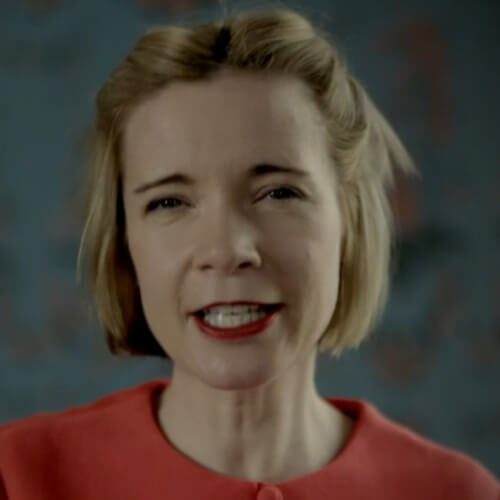
Long term viewers of Lucy Worsley often pick up on something about her speech pattern.Long-term viewers of Lucy Worsley often pick up on something about her speech pattern. There is a slight softness on some sounds, a distinctive quality to her delivery that distinguishes it from the typical BBC register, but it is not immediately apparent and does not break the flow of what she is saying. Curiosity turns into worry for some viewers. The question is posed, discussions begin, and soon the word “illness” is used in ways that exaggerate the circumstances.
Rhotacism is a phonetic articulation disorder that affects the production of the “R” sound. It hasn’t been a part of Worsley’s speech since he was a young child and doesn’t indicate anything deeper. Speech-language pathologists are clear about what it is and, more importantly, what it is not: it is not a sign of cognitive difficulty, a neurological condition, or a language disorder.
| Detail | Information |
|---|---|
| Full Name | Lucy Worsley |
| Date of Birth | 18 December 1973 |
| Place of Birth | Reading, Berkshire, England |
| Nationality | British |
| Education | BA (First Class) Ancient & Modern History, New College, Oxford (1995); DPhil Art History, University of Sussex (2001) |
| Profession | Historian, Author, Television Presenter, Curator, Podcaster |
| Known For | BBC historical documentaries; Chief Curator, Historic Royal Palaces (2003–2024) |
| Husband | Mark Hines (married November 2011) |
| Children | None (childless by choice) |
| Health Conditions | Rhotacism (speech articulation); Migraines (neurological) |
| Current Series | Lucy Worsley Investigates the American Revolution (PBS / BBC Two) |
It falls into a small and generally harmless category of articulation differences that impact pronunciation without impairing a person’s capacity for thought, speech, or room management. Over the years, Worsley has openly acknowledged it without any drama or special emphasis probably the right amount of attention to give something that has never once slowed her down.
What Worsley attempted to do about it is what makes her case intriguing. She specifically worked with a speech-language pathologist to improve her pronunciation when she moved from BBC Four to BBC Two for her series “Fit to Rule: How Royal Illness Changed History” and its wider audience.
She has been open about the fact that it didn’t work, and there’s something subtly admirable about that candor. She tried, but nothing changed, so she persisted. Her on-screen persona remained intact. Her audience didn’t get any smaller. If anything, her uniqueness has contributed to her memorability.
She also suffers from migraines. These are a completely different issue; they are a neurological condition that can seriously disrupt a workday rather than a speech anomaly. Light sensitivity, physical exhaustion, and the feeling that concentration is just impossible until the migraine passes are all familiar to anyone who has had a severe migraine.
Worsley uses medical care and scheduling to manage hers, though she hasn’t disclosed many details. It’s a condition that affects a lot more people than is generally believed, and the fact that someone working at Worsley’s level of productivity has it is noteworthy as a tale of triumph but rather as a fact that challenges the notion that high output necessitates perfect health.
The sheer improbability of her career trajectory may be a contributing factor in the curiosity surrounding her health. In 1995, she earned a first-class degree in Ancient and Modern History from Oxford, and in 2001, she earned a PhD in Art History from Sussex. She worked as a joint chief curator at Historic Royal Palaces for more than twenty years.
Over a dozen books have been written by her. She gives lectures, podcasts, and presentations. People tend to assume that someone working at this speed is, in some fundamental sense, invulnerable, so learning that she suffers from a speech disorder and crippling headaches makes the situation seem a little more plausible.
Many of the inquiries about her personal life have been based on misconceptions. When Worsley mentioned being “reunited” with her “former husband” on social media, she quickly clarified that this was a reference to something that viewers of one of her series would understand rather than a biographical revelation. Since November 2011, she has only been married once, to London architect Mark Hines.
Their Southwark home, which is described as a simple loft with a view of the Thames, is appropriate for someone whose work life is spent in ornate royal interiors; this could be a purposeful contrast or just a preference for peace and quiet. The couple is childless worsley has stated that she chose not to have children, but she later claimed that a widely reported statement that she had been “educated out of normal reproductive function” had been misinterpreted and sounded darker than she had intended.
When considered collectively, what is revealed is a profile that defies the narratives that people seem to want to associate with it. She doesn’t have any dramatic or hidden illness. She has nothing to conceal. There’s a sense that the public occasionally finds it difficult to understand a woman who is simultaneously prolific, unconventional, and not particularly interested in explaining herself beyond the history she is there to discuss, as evidenced by the way her name has appeared in numerous online searches over the years.
Her “Lucy Worsley Investigates the American Revolution” series debuted on PBS recently. According to her, the project started with jet lag, intense heat, and an unfortunate encounter with a pink sports drink on the steps of the New York Historical Society. Classic Worsley: the history ends up being the most fascinating part, the details are precise, and the self-deprecation is boring.
i) https://milomagazine.co.uk/lucy-worsley/
ii) https://www.saga.co.uk/magazine/entertainment/lucy-worsley-travel-stories
iii) https://newstra.co.uk/lucy-worsley-illness-explained-husband-and-life