
The Unexpected Role Swimming Plays in Improving Kids Classroom Performance Over Time
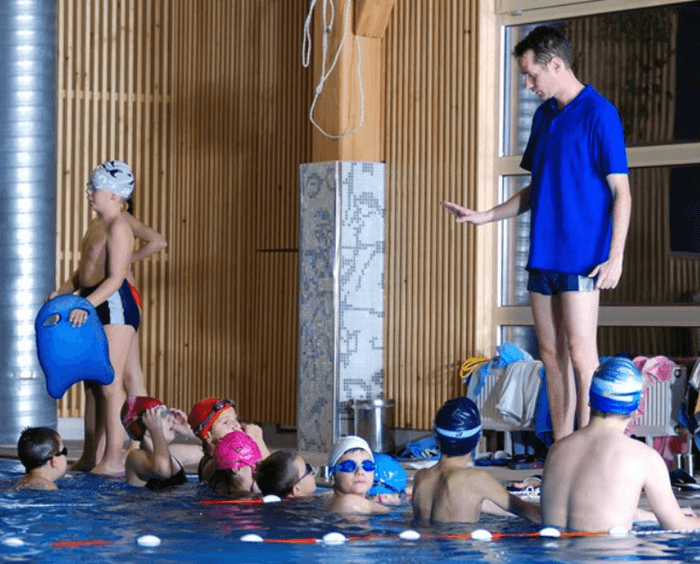
The first time the connection became obvious was late in the afternoon, after school, when a teacher subtly mentioned that her most agitated student had begun completing his work without prompting and the hallway smelled slightly of chlorine and wet sneakers.
Swimming was once thought of as a useful life skill, but in recent years, it has come to be seen as especially helpful for learning not because it teaches letters or numbers directly, but rather because it changes the way kids focus, manage their effort, and handle challenges.
| Key Context | Details |
|---|---|
| Activity | Swimming (school based and extracurricular) |
| Age Group | Primary and early secondary school children |
| Core Findings | Improved focus, memory, emotional regulation, and classroom behavior |
| Mechanisms | Increased blood flow to the brain, coordination, breath control, stress reduction |
| Broader Impact | Confidence, routine-building, and transferable learning habits |
While swimming treats focus more like a muscle that is gradually strengthened through repetition, resistance, and a strikingly similar pattern of trial and adjustment seen in academic learning, classrooms frequently treat it like a switch that can be flipped through rules or routines.
Swimming forces the brain to manage several inputs simultaneously by coordinating breathing, limb movement, and spatial awareness. This process is remarkably effective at improving mental organization and maintaining focus for extended periods of time.
Post-swim days are often described by teachers as significantly better, with students settling into tasks faster, switching between activities more smoothly, and reacting to instructions in a way that feels more relaxed rather than obedient.
Swimming, in contrast to many extracurricular activities, offers no short cuts because progress requires perseverance, consistency, and an understanding that early discomfort is a necessary part of learning a lesson that is remarkably applicable to reading fluency, problem solving, and written work.
As worries about shorter attention spans have grown over the past ten years, teachers have quietly noticed that kids who swim frequently exhibit much less anxiety about making mistakes and are more willing to begin challenging assignments.
The pool itself turns into a sort of laboratory where work is felt right away and results are apparent, strengthening cause and effect in a way that worksheets rarely do while simplifying persistence-related mental habits.
One teacher once said that swimming lessons teach kids how to manage their energy, and the analogy seems appropriate because pacing laps is similar to pacing exams in that both require self-control, awareness, and preparation rather than hurrying.
Overexertion is quickly penalized in swimming, teaching restraint via experience. This embodied lesson seems to transfer to the classroom, where students learn to read questions carefully, slow down, and better manage their time.
Swimming increases blood flow and oxygen delivery to the brain by using large muscle groups and regulating breathing. Researchers have linked this process to memory formation and processing speed that improves over time.
Changes are often first observed at home, where parents report less chaotic evenings, earlier homework completion, and more emotionally stable bedtime routines, especially after swim days.
For many young swimmers, sleep which is frequently disregarded when talking about academic achievement becomes noticeably better as physical activity promotes deeper sleep, which in turn improves memory and emotional equilibrium the next day.
Additionally, swimming fosters confidence in a surprisingly long-lasting way because small victories, like floating unassisted or finishing a distance, make success feel earned rather than given.
When a child raises a hand after weeks of silence or attempts a difficult problem without waiting for confirmation, those behaviors which teachers describe as highly reliable indicators of learning readiness tend to be subtle manifestations of that confidence in the classroom.
Swimming reinforces respect for structure and authority in a way that feels protective rather than constrictive by introducing clear rules and shared responsibility, as well as safety regulations that must be strictly adhered to.
Since disobeying instructions has tangible rather than intangible consequences, the water provides instant feedback for kids who have trouble controlling their impulses, making the lessons extremely evident and difficult to ignore.
Swimming also offers children a rare kind of mental calm since it allows them to swim laps without talking or using screens. This is a condition that is becoming more and more rare but is remarkably conducive to introspection.
Swimming fosters internal awareness by eliminating outside distractions, which helps kids identify stress, control their breathing, and bounce back from errors skills that are highly adaptable when applied to exam situations.
Crucially, not every child starts swimming with enthusiasm, and fear of the water continues to be a real obstacle for some. However, the process of gradually and supportively conquering this fear frequently results in resilience that is rarely developed through academic pursuits alone.
Teachers observe that kids who persevere through early discomfort in the pool typically approach classroom challenges in a similar way, seeing difficulty as transient rather than defining.
Swimming reinforces motivational patterns that promote sustained academic engagement by introducing concrete, quantifiable goal-setting with attainable milestones through structured lessons.
Children learn to accept criticism without becoming defensive, modify their approach, and try again by working with peers and instructors who have received training. This pattern becomes especially creative when it is reflected in writing and revision assignments.
Although swimming is frequently presented as a form of physical release, its effects on cognition manifest much more quickly than most people realize changes are seen in months as opposed to years.
Swimming’s positive effects on academics are based on gradual, cumulative improvements that subtly alter classroom dynamics over time rather than on abrupt changes.
Swimming may seem like a logistical challenge for schools with busy schedules and little funding, but when compared to fewer behavioral interventions and better attention, the return on investment seems surprisingly low.
Swimming stands out as a highly effective option that strengthens minds by first engaging bodies in the years to come, as educational systems look for holistic approaches that support learning without adding pressure.
Time spent in the pool seems to enhance academic priorities rather than undermine them, making students more composed, attentive, and capable of managing the demands of learning on a daily basis.
Instead, a strong argument for swimming as a foundational support that subtly reinforces the skills that enable kids to sit, listen, think, and persevere is presented.
The evidence keeps mounting, not only in research but also in classrooms where teachers observe fewer disruptions, more seamless transitions, and students who appear more ready to learn, day by day, lap by lap.