

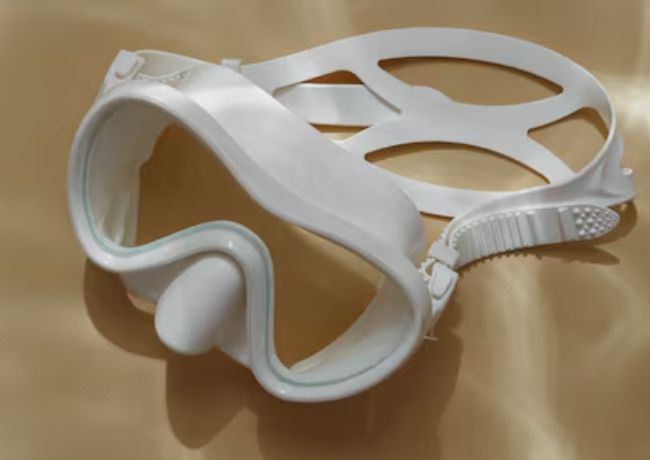
Around the fourth length of a swim, when the world outside your goggles fades into a gentle, meaningless blur, a specific type of panic sets in. It’s not overly dramatic. Foggy lenses don’t drown anyone. It’s the kind of minor, persistent irritation that swimmers discuss more than nearly anything else, and the goggles’ original sellers hardly ever give it the attention it merits.
Once you hear it explained, the mechanism is almost embarrassingly simple. As you swim, your body temperature rises, the water around you remains cool, and the air trapped inside the goggle lens sits somewhere in the middle, warm and moist against a noticeably colder surface. Condensation develops. The same thing occurs on a car windshield in the winter when the heater is blasting and the outside glass is freezing, or on a bathroom mirror following a hot shower. A tiny version of it is strapped to the face of swimmers, who have recently learned to live with it.
| Category | Detail |
|---|---|
| Topic | Swimming goggles fogging |
| Primary cause | Condensation from body heat meeting cooler lens surface |
| Common quick fixes | Saliva, baby shampoo, anti-fog spray, toothpaste |
| Lens types affected | PC (hard, competitive) and CP (flexible, comfort) lenses |
| Anti-fog coating lifespan | Wears down with repeated chlorine exposure and handling |
| Recommended care | Rinse with fresh water, air dry, store in a protective pouch |
It’s interesting and a little annoying that the anti-fog coating is frequently held responsible for failures when, in reality, it’s simply wearing out like coatings do. Depending on the type of lens, manufacturers apply these treatments in different ways. The coating is usually sprayed onto the inner surface of polycarbonate lenses, the stiff type preferred by competitive swimmers. The solution is typically impregnated directly into the material of softer, more flexible lenses designed for comfort, which should last longer because there is nothing on the surface to rub off. In reality, even the more resilient models are gradually eroded by exposure to chlorine and the simple habit of touching the lens to remove water droplets.
It appears that most swimmers make mistakes at that final point without even realizing it. Swiping a finger across foggy lenses while swimming is a nearly universal instinct, similar to wiping a foggy window. It seems like it ought to be beneficial. It doesn’t. Rather, the motion gradually removes any remaining anti-fog treatment, leaving a permanently damaged lens that fogs more quickly with each swim until it can no longer be saved.
Strangely, among competitive swimmers, including those competing at the Olympic level, saliva has become something of an open secret. The silent little ritual of spitting into a lens before stepping onto the blocks appears odd from the stands, but the reasoning makes sense. As a surfactant, saliva breaks up surface tension, causing condensation to form as small, innocuous droplets that roll away rather than forming a uniform layer of fog. It is inexpensive, accessible everywhere, and operates almost instantly. The drawback is that it only lasts for a couple of swims, and anyone using a public or shared pool will undoubtedly feel uncomfortable due to the stares of other swimmers.
Baby shampoo has quietly gained popularity as an alternative for those who would prefer not to use spit. It is kinder to the eyes than regular shampoo, works on the same surfactant principle, and leaves a thin protective film. It still needs to be rinsed off fifteen minutes or so before swimming to prevent irritation. Some swimmers also incorporate toothpaste into their routines, a technique borrowed from scuba diving circles. There is a warning: anything gritty or abrasive runs the risk of permanently scratching the lens, so a small, smooth dab is preferable.
Commercial anti-fog sprays, which essentially recoat the lens as it was treated in the factory, are at the more dependable end of the spectrum. For swimmers who frequently use goggles, a single bottle typically lasts longer than multiple pairs of lenses, but they are not free and need to be quickly rinsed afterward to ensure no residue irritates the eyes. It’s important to remember that if the goggles don’t seal properly against the face in the first place, none of these fixes will really help. No matter how fresh the coating is, a poor fit allows perspiration and pool water to seep in, making fogging appear worse than it actually is.
After every swim, rinse with cool, fresh water, let the goggles air dry completely, and resist the urge to touch the lenses at all. This advice seems almost antiquated, but it works the best. It’s not glamorous, and the packaging definitely doesn’t reflect that. Swimmers who have been doing this for years often bring it up almost casually, similar to how people discuss flossing, an unremarkable habit that subtly averts a much more significant annoyance later on.
i) https://www.simplyswim.com/blogs/blog/5-tricks-to-stop-swimming-goggles-fogging-up
ii) https://www.speedo.com/blog/swimwear/speedo-anti-fog-how-we-prevent-steamy-goggles/
iii) https://www.proswimwear.co.uk/how-to-prevent-your-goggles-steaming-up/
iv) https://www.quora.com/What-should-I-do-if-my-swimming-goggles-fog-up-during-a-swim