

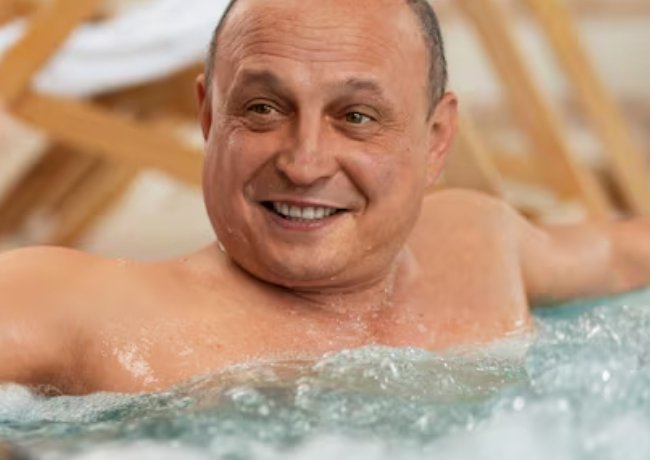
Around eleven in the morning on a weekday, a certain silence falls over a community pool. Half-watching, the lifeguards lean against their chairs. There are a few empty lap lanes that ripple slightly from the filtration system. Then, almost on schedule, a few elderly people enter with towels slung over their shoulders and move with the calm assurance of those who have done this before. It’s not glitzy. No one takes pictures of this kind of scene for a fitness magazine. It may be one of the most successful health initiatives taking place in plain sight.
Senior swimming has become somewhat of a quiet phenomenon in recent years, not due to any viral trend or marketing campaign, but rather because the math just works. In a way that few other settings can, the buoyant, forgiving, and oddly democratic nature of water provides the movement that aging bodies require without harming their joints. There may be no other type of exercise that demands so much of the muscles and so little of the skeleton.
| Category | Details |
|---|---|
| Topic | Swimming for Seniors |
| Recommended Frequency | 2–3 sessions per week |
| Calories Burned (moderate pace) | Approximately 493/hour for a 155-lb person |
| Heart Disease Risk Reduction | Up to 41% lower risk reported in sports medicine research |
| Best Beginner Stroke | Breaststroke |
| Recommended First Step | Consult a physician before starting |
| Ideal Pool Conditions | Mid-day, low-traffic hours; shallow entry, handrails |
It is difficult to overlook the cardiovascular case alone. Regular swimmers have a significantly lower risk of dying from heart disease than sedentary individuals, according to research; some studies have shown reductions as sharp as 40 percent or higher. That is not a minor advantage. Theoretically, that kind of number ought to receive more attention than it does. Swimming requires the heart and lungs to work, but it does so without the joint strain of high-intensity classes or the startling impact of running on pavement. As people get older and their bodies’ ability to withstand repeated impacts begins to deteriorate, there is a feeling that this becomes increasingly important.
The effects of water resistance on muscle are less evident, but perhaps more fascinating. There is hardly anything to push against in the air. Depending on how you navigate it, water offers significantly more dozens of times more. Invisible and unglamorous, that resistance is subtly strengthening legs, shoulders, and backs that might otherwise be weakening. That strength isn’t abstract for a seventy-year-old. It’s the difference between falling and catching yourself on a curb.
A similar, albeit milder, story is told by joint pain. While it doesn’t go away in the pool, arthritis frequently becomes less severe. While allowing muscles to work hard enough to stabilize those same joints, the water relieves weight from hips and knees that have been absorbing impact for decades. It’s a peculiar kind of paradox less stress, more support which is probably why so many physical therapists subtly suggest it before anything else.
Additionally, even though it probably shouldn’t, the issue of the mind is often overlooked when discussing senior fitness. Swimming has been associated with lower levels of anxiety and depression, and some of this is probably due to basic biological factors like endorphins, rhythmic breathing, and the calming effects of repetitive strokes. Another, more difficult-to-quantify phenomenon is also occurring. One way to eliminate noise is to float in the water. Gravity ceases to bother you. The body feels lighter than it has in a long time. You can practically see the moment someone’s shoulders drop when you watch them go through that for the first time.
Scientifically speaking, cognitive benefits are more ambiguous, but they do exist. According to some research, older adults who regularly participate in aerobic activities including swimming perform better on cognitive tests than those who do not. It’s still debatable whether that’s movement in general or swimming in particular. Even though the exact mechanism is unknown, it’s difficult to rule out the possibility that improved sleep, improved mood, and a more active heart could all contribute to a sharper mind.
All of this does not entail literally or figuratively plunging into the deep end. The standard advice from most instructors is to start slowly, become at ease standing in shoulder-deep water, and learn to float before learning to stroke. Because it keeps the face above the water and feels less frantic than crawl, breaststroke is typically the easiest to start for adult beginners. In a matter of months, a sixty-five-year-old who has never swum a lap in their life can frequently surprise themselves more than anyone else by performing relaxed lengths.
Learning something new, something physical, something that once seemed impossible, can give you a certain kind of late-life confidence. People start swimming later in life for a variety of reasons, such as wanting to move painlessly or chasing a spouse off a boat in the Mediterranean. Most of the time, the result is the same: calmer minds, more stable balance, and a habit that, once established, tends to stick.
i) https://www.swimnow.co.uk/swimming-at-any-age/swimming-for-seniors-top-health-benefits-and-reasons-to-dive-in/
ii) https://www.proswimwear.co.uk/swimming-for-seniors-staying-healthy-active-in-the-pool/
iii) https://oaksatdenville.org/blog/lap-swimming-for-seniors-12-tips-for-a-better-workout/
iv) https://freedomsquarefl.com/blog/health-benefits-swimming/
v) https://www.theosborn.org/blog/benefits-swimming-older-adults/