

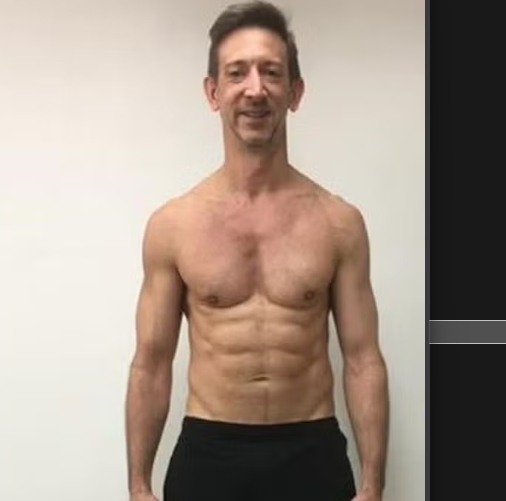
Knowing exactly who you used to be physically and seeing that version of yourself subtly disappear can cause a certain kind of frustration. James Leib is familiar with that emotion. The 48-year-old director of creative strategy at Banana Republic, located in New York, had trained daily with a personal trainer and run Spartan races for years. Then there was a high-demand job, which always happens gradually rather than all at once.
Most people were derailed by the trip alone. Red-eye flights, endless meetings a schedule that leaves little time for 6 a.m. workouts. Leib was soon able to visit the weight room once or twice a week, depending on his luck.
He could sense the softness seeping in, the kind that doesn’t make a big impression but manifests itself in the way clothes fit differently and the way energy levels drop at strange times. A few pounds more. An athletic build had given way to one that was noticeably less defined. Many people in their mid-forties fall victim to the slow drift.
James Leib’s fitness routine transformation is intriguing, but it’s not because he discovered a miracle. No one was present. Instead of an idealized version of his life, he discovered something far more beneficial: an exercise program based on the reality of his life.
Leib discovered a new six-week program called Anarchy Abs during an occasional session with his longtime trainer Andy Speer, with whom he had worked for more than ten years. Each session lasts for thirty minutes. Every day of the week. Very little equipment. The type of exercise you can perform in a hotel room using two sets of dumbbells and a wide area of floor.
He was among the first to sign up and test it. He was genuinely sore after the first session, which in retrospect was probably the most obvious indication of how much ground he had lost. He persisted. For six weeks, he worked three days a week, even on days when he had to travel, even though getting on the ground after a long flight was the last thing he wanted to do. The program’s accessibility might have been the key factor. Excuses run out more quickly when a workout can follow you across time zones.
The fundamental idea of the program was to focus more on exercises that work your entire midsection without you even realizing it, rather than on never-ending crunches. Leib talked about times when he would complete an exercise and then realize which muscles had been used. That type of indirect interaction is typically more long-lasting and likely more truthful about how the body really works when moving.
As usual, diet also played a role. The soft calorie accumulation of a life spent in restaurants and airports had been subtly introduced by the frequent travel, along with a lot of refined carbohydrates, pasta wine with client dinners. Leib reduced his intake of refined carbohydrates, increased his intake of rice and sweet potatoes, doubled his protein intake from salmon and chicken began consuming more vegetables than he probably had in years. It wasn’t dramatic at all. It all added up.
After six weeks, the numbers were clear: he had gained a pound of muscle, lost 1.25 inches from his waist his body fat had decreased from 7.3% to 6.5%. For someone who is already lean, those are significant changes. When Leib discussed what he truly gained from the experience, he said something more insightful than the measurements. He claimed that it helped him get back into his rhythm. Even when traveling, I now work out five times a week. The habit had come back.
When someone like Leib talks about transformation, it can be tempting to concentrate solely on the physical outcomes, such as the body fat percentage and waist measurement. The transformation of James Leib’s exercise regimen is likely more instructive as a tale of discipline than beauty.