

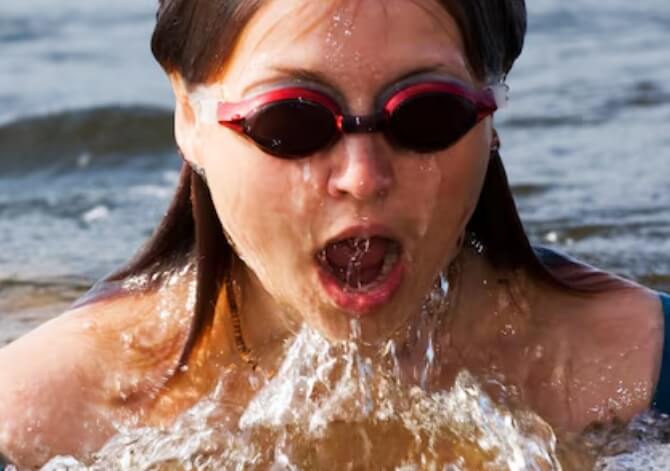
When open water swimmers talk about that first morning dip, they describe a specific sound: an involuntary gasp, followed by laughter, and then silence. London-based wellness coach Dinah Sershi, who has been swimming outside for seven years, is familiar with the sound. “Euphoric” is how she describes the subsequent feeling. It’s a term frequently used by those who have developed the habit, and it contributes to cold water swimming’s transformation from a fringe activity to a movement.
This is somewhat supported by the numbers. Television hasn’t stopped the growth of wild swimming groups in the UK over the past few years; a BBC show that featured Wim Hof challenging celebrities in below freezing temperatures only served to fuel an already-warming trend, if that’s not an odd way to put it. The community attracts people just as much as the cold. Sershi asserts that “when you are swimming in open water you are not just surrounded by nature, you are in it”, and there is truth to that statement. It’s not a swimming pool. It’s cold, light, current, and weather all at once.
| Category | Details |
|---|---|
| Activity | Cold Water Swimming / Outdoor Swimming |
| Average UK Sea Temperature | Around 12°C year-round |
| Primary Risk Period | First 1–2 minutes after immersion |
| Leading Cause of Drowning | Cold water shock, not hypothermia |
| Recommended First Step | Medical check-up for heart conditions, asthma, pregnancy |
| Key Safety Body | RNLI – Royal National Lifeboat Institution |
| Notable Researcher | Prof. Mike Tipton, University of Portsmouth |
| Reported Benefits | Mood improvement, community, possible menopause symptom relief |
The same water that causes that rush has also claimed a life in recent weeks. During what was reportedly a cold water therapy session, a 39-year-old woman in Derbyshire died after going into a river. It’s the kind of story that jumps right into the wellness narrative and poses the obvious question that no one wants to think about while wearing a swim cap: how dangerous is this, really?
For over thirty years, Professor Mike Tipton has attempted to provide an answer to that question. His findings at the University of Portsmouth are less mystical than swimmers might like. His research focuses on what happens to the human body in the seconds and minutes after it hits cold water. He suggests that rather than a higher spiritual unlocking, the “rush” that so many people describe is at least partially caused by a stress hormone surge, the body’s blunt, ancient response to sudden cold.
It is genuinely unclear whether cold water swimming, as some enthusiasts and a few early studies have suggested, effectively treats depression, eases grief, or slows dementia. As of yet, there is no scientific agreement. People still think it works despite this, and perhaps it does for some of them.
What is settled and perhaps more urgent is the physical effects of cold water on the body. The RNLI is straightforward about the average sea temperature in the UK, which is about 12 degrees Celsius: entering water at 15 degrees or lower is often underestimated as a danger.
An involuntary gasp reflex is triggered by cold water shock, which occurs almost instantly in a matter of seconds rather than minutes. Water can enter a swimmer’s lungs if their head is submerged at that precise moment or if a wave passes over them. It requires very little. A disproportionate number of cold water deaths in Britain each year are caused by that one, mistimed gasp.
If you survive that initial gasp, the body enters the next phase, which is a rise in heart rate and a narrowing of blood vessels in the hands and feet to maintain body temperature. According to Tipton’s research, this acute shock response usually goes away in one to two minutes, which sounds almost comforting until you think about how much can go wrong during that time. It seems to be blunted by preparation. Swimmers who anticipate a gasp and prepare for it instead of being caught off guard typically have better breathing control. Also beneficial is repeated exposure; familiarity reduces the shock response. Tipton carefully notes that none of these completely eliminate the risk.
Cold incapacitation, also known as swim failure, is a second, more subdued threat that receives less attention than the dramatic opening moments. After the initial shock has subsided and a swimmer has found a rhythm that feels comfortable, it gradually becomes apparent. It still feels good in the water. The body then gradually continues to lose heat despite this, with muscles slowing, limbs becoming heavy and uncoordinated, and blood retreating to protect the organs. Halfway across a lake, a swimmer may find that their hands are too clumsy to grasp a ladder or a riverbank, making it impossible for them to finish the distance. It’s an unglamorous way to drown, and it happens to both nervous and confident swimmers.
All of this does not imply that cold water swimming should be discontinued, and very few people who are serious about the sport are making the case. Instead, the evidence points to something more commonplace and likely more beneficial: respect the water, enter gradually, stay close to the shore until you’ve adapted, swim with experienced swimmers, and get checked out first if you have a heart condition, asthma, or are pregnant.
The RNLI’s own warning, which states that not everyone can be saved and that British rivers and seas are cold enough to render a person helpless in a matter of seconds, is almost harsh. After hearing Sershi discuss community and euphoria, this sentence is difficult to read. The most accurate way to characterize the current state of this trend is probably to say that both statements are true simultaneously.
i) https://www.bbc.co.uk/news/health-61260268
ii) https://rnli.org/safety/choose-your-activity/open-water-swimming
iii) https://www.outdoorswimmingsociety.com/risks-cold-water/
iv) https://www.boots.com/healthhub/fitness-exercise/what-is-cold-water-swimming
v) https://dryrobe.com/blogs/latest-news/the-benefits-of-cold-water-swimming-and-how-to-get-started