

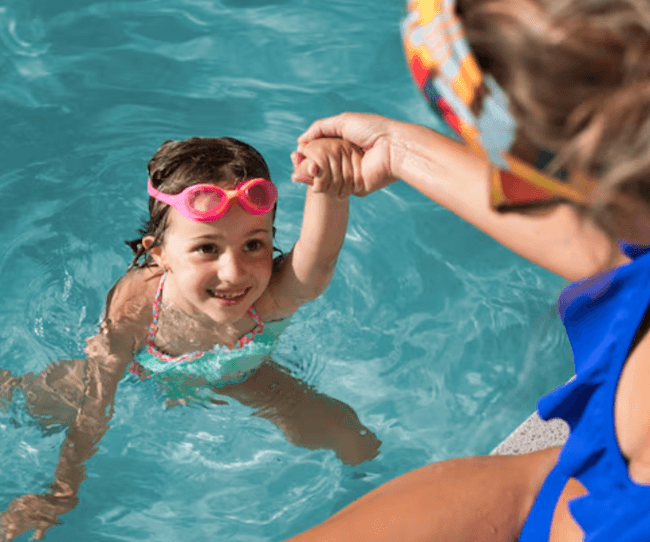
Swimming is frequently described by child therapists as an environment rather than an intervention, one that is remarkably similar to a reset button for kids whose nervous systems seem to be constantly on, buzzing like a swarm of bees that can’t quite land.
Swimming has gradually evolved over the last ten years from a recreational activity to one that therapists talk about with greater assurance, especially when the topic of engagement, resilience, and regulation comes up.
| Context | Key Facts |
|---|---|
| Core Idea | Swimming is frequently recommended by child therapists to support emotional regulation, sensory processing, confidence, and physical development |
| Physical Benefits | Full-body, low-impact movement that builds coordination, strength, endurance, and breath control |
| Emotional Impact | Associated with reduced anxiety, improved mood, increased self-esteem, and calmer nervous system responses |
| Therapeutic Application | Used in structured aquatic therapy or informal swim programs adapted to a child’s abilities |
| Accessibility | Flexible across ages, abilities, and needs, making it particularly inclusive |
Much of the work is done by the water itself, which provides buoyancy that greatly lessens the physical strain of movement and constant sensory feedback that many kids find calming rather than overwhelming.
Gravity can feel like a never-ending negotiation for kids who struggle on land, but in a pool, their bodies move much more easily, allowing effort to switch from compensation to exploration.
In contrast to many seated or verbal strategies, therapists frequently observe that once a child enters the water, breathing slows, shoulders drop, and attention becomes surprisingly focused.
For kids with different developmental profiles, swimming simplifies sensory input and frees up mental space in a way that feels incredibly versatile. Swimming requires coordination across arms, legs, and breath.
Swimming asks the brain to handle rhythm, timing, and spatial awareness simultaneously, in contrast to activities that isolate skills. This is especially helpful for kids who require integrated experiences rather than disjointed tasks.
The first time a child releases the pool wall or floats on their own, for example, are small but significant milestones that subtly foster self belief and trust during early sessions.
Therapists often see that parents report significantly better sleep, more relaxed transitions, and a greater willingness to try new things as their confidence in the water gradually grows.
I paused in the middle of the interview because I was struck by how frequently therapists characterized swimming as revealing what kids could already do once the noise subsided, rather than as a way to fix something.
Additionally, swimming provides a manageable level of risk that lets kids push boundaries while still receiving support—a balance that is incredibly effective at building resilience without inciting avoidance or shutdown.
Incorporating play into aquatic therapy allows therapists to support speech, social interaction, and emotional expression while keeping the child physically active through the use of toys, games, and made-up scenarios.
Water pressure gives kids with sensory processing issues constant access to full-body input, which lessens the need for persistent seeking behaviors that can interfere with other learning activities.
Compared to many land-based exercises, swimming’s repetitive and predictable rhythmic nature serves as a calming pattern that regulates the nervous system in a significantly better way.
Another layer is added by group swimming sessions, which remove the pressure of direct conversation that can impede interaction while promoting social awareness through shared space and taking turns.
Therapists note that children frequently imitate one another in the pool, learning by imitation and observation a very effective and subtly self directed approach.
While parents concerns about safety are legitimate, therapists typically emphasize how safety skills and emotional development coexist rather than vie for attention.
For kids who process experiences physically before learning to speak, swimming is especially novel because it doesn’t require them to perform insight or explain feelings on demand.
Swimming enables mastery to be embodied by providing success that is felt rather than explained, thereby fortifying the connection between action and confidence in a way that is remarkably resilient.
Children are frequently more controlled, involved, and upbeat after spending time in the pool. This pattern is consistent across therapy settings, indicating that swimming enhances readiness rather than taking the place of therapy objectives.
Reliability, rather than novelty, is what makes swimming unique; therapists continue to suggest it because the benefits are seen, replicated, and expanded upon over time.
Swimming is a useful, hopeful option that aligns movement, emotion, and growth without requiring perfection for families looking for supportive strategies that feel encouraging rather than clinical.