

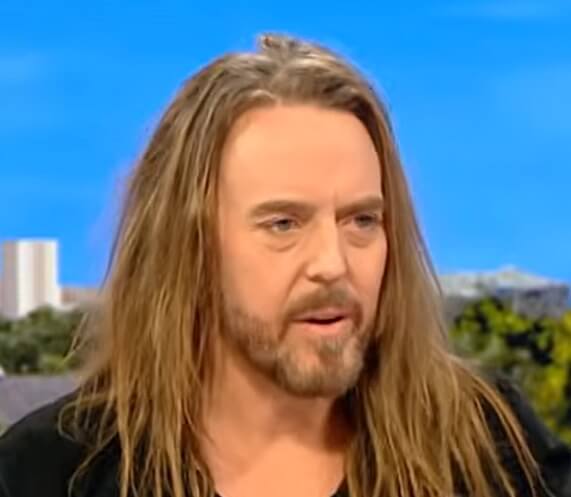
Putting a single number next to Tim Minchin’s name seems almost contradictory. The numbers that are circulating on the internet vary greatly; some sources claim $6 million, while others insist on $25 million. The difference between those two figures reveals nearly as much about the state of celebrity wealth reporting as it does about Minchin.
The same assured tone is used to repeat both figures. Neither is properly sourced as usual, Minchin has also never bothered to make corrections. We do know that the money came from a career that was remarkably dispersed.
| Bio Data | Details |
|---|---|
| Full Name | Timothy David Minchin AM |
| Date of Birth | October 7, 1975 |
| Place of Birth | Northampton, England |
| Nationality | British-Australian |
| Education | BA English & Theatre, University of Western Australia; Advanced Diploma in Contemporary Music, WAAPA |
| Profession | Comedian, Composer, Actor, Lyricist, Musician, Writer |
| Spouse | Sarah Minchin (m. 2001) |
| Children | Two — Violet and Caspar |
| Notable Works | Matilda the Musical, Groundhog Day The Musical, Californication, Upright |
| Major Honours | Olivier Awards, Tony Award, Grammy nomination, Member of the Order of Australia (2020) |
| Estimated Net Worth | Reported between $6 million and $25 million (sources vary) |
| Official Website | timminchin.com |
He began in Perth, sat at a piano with eyeliner all over his face, and managed to write one of the most popular musicals of the past 20 years. The backbone of his finances is that journey from a small Australian theater scene to the West End and Broadway. Although theater royalty structures are infamously private and Minchin has never been the type to sit down for a Forbes-style breakdown of his earnings. Matilda the Musical. Which debuted in 2010 and hasn’t stopped breathing since.
Is most likely the single biggest contributor to his net worth. The magnitude of Matilda is easy to overlook, so it’s worth taking a moment to consider it. At the time, the show set a record by winning seven Olivier Awards.
Twelve Tony nominations were received after it traveled across the Atlantic. Minchin’s songs traveled with the Netflix film adaptation, which debuted in late 2022. There are productions in London, on tour, and on screen. Each of those constitutes a distinct source of income. And even small royalties can have a significant impact on a person’s financial situation when applied to a worldwide success that has been around for more than ten years.
His second major musical, Groundhog Day, debuted at The Old Vic in 2016. Although it didn’t have the same commercial success as Matilda, it gave him more Tony recognition and kept him in the spotlight in a world where composers can vanish between projects. The revenue picture begins to make sense when you include his live performances, which Minchin does frequently with full orchestral arrangements. His tour of “An Unfunny Evening with Tim Minchin and His Piano” took place in crowded theaters throughout Australia.
The UK. And Europe the kind of venues where ticket prices rise without much protest. In a more subdued way. Television completes the picture. His 2013 role as Atticus Fetch on Californication introduced him to a previously untapped American audience. The more intimate project was Upright, the quirky road-trip series he co-wrote and starred in for Foxtel between 2019 and 2022. This is the kind of thing artists do when they’ve already secured the bigger paychecks elsewhere and want to make something that truly matters to them.
It’s difficult to ignore how many of his decisions feel that way. He had the option to remain in Los Angelesm he didn’t moved his family back to Sydney in late 2017. Walked away from a major Hollywood film project that collapsed shortly before. And made a smaller Australian show instead.
That choice reveals something about his attitude toward money. There’s a strain of public commentary in his interviews sometimes spiky, sometimes weary about fame, online discourse, and the cost of chasing relevance. He took a break from social media.
He freely discusses routine, discipline, and his desire to write rather than perform. None of that points to someone maximizing their earnings. It implies a person who got to the point where he could afford not to.
This returns us to the problematic issue of the precise number. The $6 million estimate appears to be based on earlier projections that haven’t been updated to account for the second musical, ongoing tours, the Netflix adaptation, and ten years of Matilda royalties. On the other hand. The $25 million figure seems more in line with what a working composer with a long-running worldwide hit might actually amass. Though it is still speculative in the absence of disclosed earnings.
When pressed, industry observers typically lean toward the higher end, but nobody is really sure. Observing the trajectory, it’s interesting to note how little the dollar amount seems to matter. Minchin’s reputation is based on Matilda, the early shows that caused discomfort in constructive ways, and the songs that criticized religion, manners, and grief. The money is real, but it essentially serves as a footnote to a different, more intriguing career the kind that only arises when someone consistently declines to take the obvious action.
i) https://www.celebritynetworth.com/richest-celebrities/richest-comedians/tim-minchin-net-worth/
ii) https://mabumbe.com/people/tim-minchin-age-net-worth-biography-family-career-highlights-more/
iii) https://www.realestate.com.au/news/tim-minchin-spotted-at-coogee-beachside-mansion-up-for-auction-with-9m10m-price-guide/
iv) https://www.filmibeat.com/celebs/tim-minchin/biography.html