

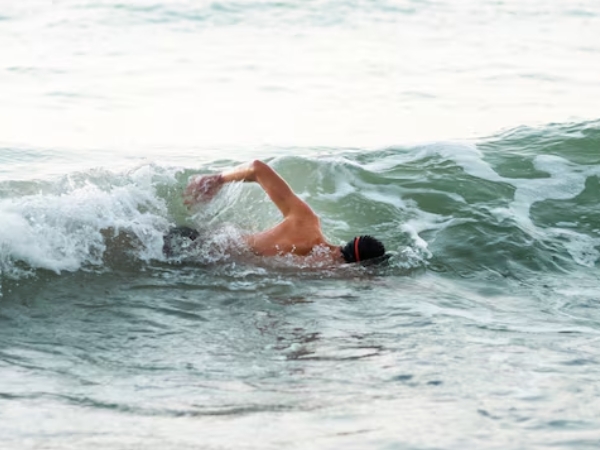
When you witness your dog being dragged away from shore, a certain kind of panic sets in. The water has them every instinct you have tells you to chase after them. One minute they are racing through the shallows with their ears flat and their tail spinning like a propeller. Even though it’s a natural instinct, it can kill you.
Even seasoned swimsuits are caught off guard by the deceptive nature of rip currents. They don’t appear aggressive. Often, all you’ll see is a narrow channel of slightly discolored water that is moving away from the beach and may be a little choppier than the rest. That seemingly peaceful hallway has the capacity to pull at up to two meters per second. The ocean doesn’t make its presence known.
It’s important to take this seriously, according to Dogs Trust: if your dog has trouble in the water, stay out of it. Make a 999 call and request that the coast guard remain on the shore. When you watch your dog struggle, it seems nearly impossible. The logic is sound.
A distressed dog will be confused, scared flailing because they have no idea what’s going on. The dog might swim “towards” a person instead of the beach if they get into the water. Now that there are two people in danger rather than just one, the Coast Guard is faced with a more difficult rescue.
There is another aspect of rip currents in particular that is important to comprehend. They can be found anywhere there are breaking waves, such as piers, breakwaters big lakes, not just on open ocean beaches.
That secluded beach with its striking cliffs and deserted parking lot isn’t always safer; it might be farther away from assistance. Even strong swimsuits, whether human or canine, can be swept out in a matter of seconds, experts frequently caution pet owners. Despite its comforting appearance, a well-developed rip is far more effective than the dog paddle.
Staying visible on the shore and speaking in a steady, calm voice are actually helpful. Dogs use sight and sound to orient themselves. They have something to swim toward when you call to them from a fixed location. Standing motionless and yelling when you want to wade in is counterintuitive, but it’s the better course of action.
Perhaps more than most people realize, planning is important in this situation. It takes about three minutes to check the RNLI tide and hazard information in addition to the weather app prior to arrival, which completely alters the computation.
While some sections of the coastline are calm for the majority of the year, others are infamous for rip activity during low tide. Understanding the difference is the kind of thing that, up until it’s not, feels like excessive preparation.
It’s also important to think about whether swimming is truly necessary for your dog. Regardless of breed, not all of them wish to. Because of the physics of their anatomy, flat-faced dogs like French Bulldogs, Bulldogs Pugs have difficulty swimming.
Many perfectly healthy, energetic dogs simply find waves frightening senior dogs tire more quickly than their enthusiasm allows. It’s still fun to let a dog splash and wade in the shallows. It is not necessary to conquer the sea.
If you let your dog swim, a well-fitting life jacket with a handle on the back will change your options in an emergency not because you should go into the water, but because the coast guard will have something to grab. Vibrant colors are also beneficial. Every second of visibility counts in a search situation.
Beneath all of this, the harsher reality is that sometimes rescues don’t work out going in after an animal increases rather than decreases the likelihood of that. Good intentions are not an exception to the rule of the sea. Remaining on the shore and asking for assistance will keep your dog’s attention on your voice, which is not ineffective. That’s acting morally.
i) https://www.bbc.co.uk/news/articles/cpw9y72x7yvo
ii) https://rnli.org/water-safety/beach-safety/dogs-at-the-beach
iii) https://www.medvet.com/pet-water-safety/