

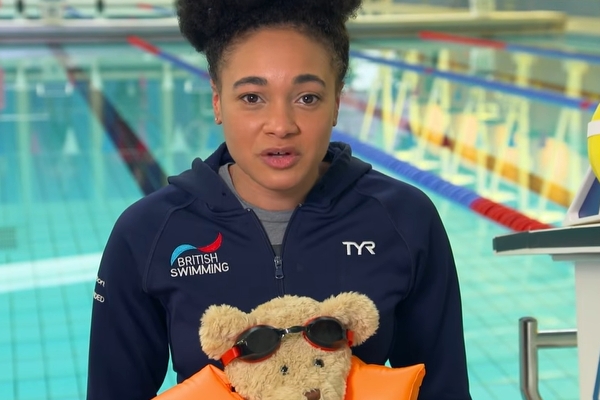
Alice Dearing mentioned a detail almost casually, but it stuck with me longer than almost anything else she said. When her mother took her to swim lessons in Birmingham, people would openly stare at a Black woman and her daughter as they entered a swimming pool. As a young child, Dearing thought it was because she was small but gifted. With the unique fatigue of someone who has spent years uncovering moments they once believed to be innocent, she now acknowledges, “Maybe we were being naive”.
That silent, awkward admission reveals something about British swimming that the sport has been hesitant to acknowledge. There was not a single Black woman on Team GB’s swimming squad for 125 years. Never once. That isn’t a statistical anomaly or an oversight. It’s a pattern: the person who plans to end it is currently among the world’s top open-water marathon swimsuits.
When she first entered the pool, she was seven or eight years old. grew up competing in the junior divisions and, at the age of 16, made her first GB team in the 400-meter freestyle after discovering her stride in long-distance open water. She unexpectedly won the world junior open-water championship at the age of 19, considering that the 10-kilometer European junior trial she had inadvertently entered was held in 14-degree rain without a wetsuit. She says, “I didn’t even know it was over 10km”. It’s the kind of tale that, until you remember that she prevailed, sounds like the beginning of a joke.
It’s difficult to ignore how much of Dearing’s career has been spent silently taking in inappropriate events. In a conversation with another swimmer when she was seventeen, a coach with whom she had never even spoken used the N-word to characterize her. She learned about it indirectly. “I just kind of buried it and put it to one side” , she responds.
She reported it, was offered the choice to call the police, but decided against it. The explanation is clear: she just didn’t want to spend any more time on it. Dearing has obviously had to do this more than once. Marginalized people learn a specific type of emotional math that determines how much energy a wound deserves.
Her refusal to allow the barrier-breaking label to become her whole identity is what makes her story worth reading beyond the headlines of Olympic history. She partnered with Soul Cap, a company that makes swimming hats for afro hair, co-founded the Black Swimming Association became the lead ambassador for an organization working to address the startling statistics that 80% of Black children and 95% of Black adults in England do not swim.
She gets up at 4:30 a.m. to train while pursuing a master’s degree in social media and political communication at Loughborough. Although she seems to manage it through sheer focus, it’s worth considering whether there is a version of this schedule that doesn’t eventually become unsustainable.
Outsiders sometimes underestimate the significance of the hair question. Afro hair is harmed by chlorine in ways that other hair types are not, which is significant when communities are already finding excuses to avoid swimming pools. “It sounds frivolous and shallow”, Dearing says, “but it is such a big factor because it’s part of who we are”. She is correct that it sounds that way, but she is also correct that it shouldn’t. Rarely are there significant obstacles to participation. They build up into little, daily deterrents that, while seemingly insignificant on their own, collectively prevent entire communities from accessing the water.
Dearing seems to be aware of the significance of being a symbol without really wanting to bear it. She has quoted Idris Elba as saying that she wants to be remembered for her accomplishments rather than her struggles, rather than just being the first Black person to do something.
Every statement she makes reflects the conflict between the need for visibility and the wish to be perceived as simply a superb swimmer. “I don’t want to always be referred to as the black swimmer from Britain” , she said. “But perhaps it is necessary if it helps inspire another child to get in the pool, aged eight just give it a go” .
In actuality, she has already motivated them. She claims that compared to before, she now sees more Black swimsuits by the pool. She claims that she is constantly their biggest admirer in her mind as she watches them. That is not the language used by a representative. That person genuinely enjoys the sport and wants it to resemble the nation it is meant to represent.
It’s still unclear how quickly that change will occur. Sporting institutions tend to celebrate diversity in waves that break and recede the numbers are striking. The culture is changing slowly. According to Dearing, she has generally been skeptical of these movements. She’s choosing to remain optimistic because she’s noticed something different in the persistent energy surrounding this specific moment. The thoughtful, deliberate choice to think it’s worth the effort may be the most human aspect of her, not the records or the history-making.