

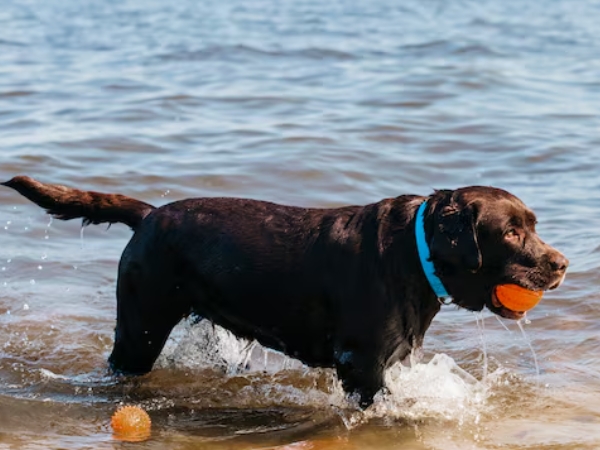
When you load the car with a flask, warm British morning towels a dog that is circling the boot with barely contained energy, there’s a certain kind of anticipation. Although the regulations have subtly tightened, not all pet owners who intend to let their animals splash through the surf this summer have caught up.
Every year, a patchwork of prohibitions along the UK coastline go into effect as May approaches. The majority last until the end of September, which coincides with the peak time of year when families flock to British beaches.
The Public Space Protection Order (PSPO), issued by local councils in accordance with the Anti-Social Behavior, Crime and Policing Act of 2014, is the legal mechanism underlying the majority of these restrictions. It’s the type of legislation that doesn’t make news until someone is fined, at which point the surprise is usually real. Certain council bylaws impose fines of up to £1,000, which is a high cost for an unplanned paddle.
The fact that the bans aren’t consistent contributes to how difficult it is to navigate them. Some councils completely prohibit dogs from being on the beach during certain hours. Some choose to take partial measures, such as limiting pets to the promenade instead of the beach or keeping dogs on leads only.
Because Cornwall has some of the strictest seasonal regulations in England, the county’s year-round exceptions Sandymouth near Bude, portions of Holywell Bay the eastern portion of Praa Sands are particularly worthwhile to learn about. Some beaches even limit access to a daily window, usually from 10 a.m. to 5 or 6 p.m., so running along the shoreline early in the morning is still perfectly acceptable.
The justification for the limitations is fairly simple. Summertime brings a lot more people to beaches, many of them families with small children. Uncollected dog poop near water poses serious health risks.
The widespread seasonal ban feels a little harsh as a policy tool because it seems like councils are primarily responding to a small percentage of owners who don’t clean up. The dog owners standing at the taped-off beach edges on a Tuesday in July tend to disagree with the councils’ claims that enforcement significantly alters behavior.
It’s important to understand that the regulations don’t apply consistently throughout the coastline and do not apply to guide dogs. Bamburgh, Druridge Bay, Seahouses Lindisfarne all welcome dogs year-round without seasonal restrictions, making Northumberland by far the most permissive major coastal county in England.
Wales also adopts a very laid-back attitude, with the Gower Peninsula’s Rhossili and the majority of the Lleyn Peninsula’s beaches in Pembrokeshire National Park being dog-friendly all year round. The majority of beaches are open to dogs at all times thanks to Scotland’s even more expansive access rights framework.
Finding the beaches they don’t cover is a more practical solution for dog owners who are dedicated to taking their dogs for walks along the coast during the summer than fighting the restrictions. Visits to seasonally restricted beaches in the early morning are frequently outside of the prohibited hours.
There are no seasonal restrictions at all in the truly remote areas, especially in the Outer Hebrides Luskentyre on Harris, Berneray’s west beach the twin sands of Vatersay; even in August, parking lots are rarely full.
Once you start viewing the UK coastline through this lens, there is something to quietly appreciate about its sheer diversity. The prohibitions are in place. They are enforceable and real; disobeying them could result in a four-figure fine. By any measure, the nation’s dog-friendly beaches are truly great knowing which ones to avoid before you leave is becoming more and more important.
i) https://fourleggedguests.com/blog/all-year-round-dog-friendly-beaches-uk/
ii) https://www.comparemyvet.uk/blog/dog-friendly-beaches-uk/
iii) https://www.thedogholiday.co.uk/dog-friendly-beaches-uk/