

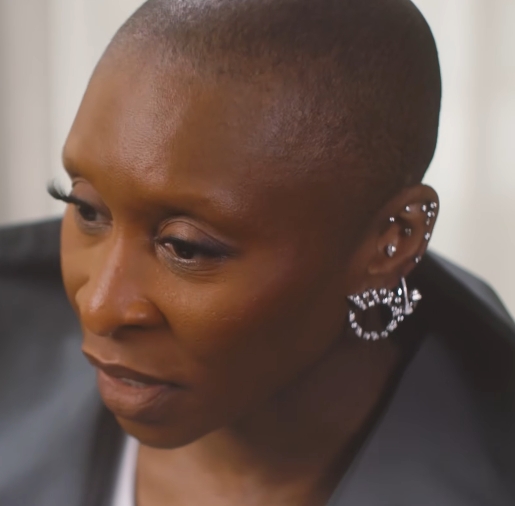
Every time a woman in the public eye appears noticeably thinner, the internet observes, computes, speculates then debates whether it had the right to do any of that in the first place. The most recent person to find herself at the center of this particular cycle is Cynthia Erivo, whose body is discussed in entertainment columns and social media threads with a certainty that seldom stops to consider what she might think of all this attention.
The extent to which the coverage reverts to a well-known script is difficult to ignore. A woman who is, by all professional standards, one of the most accomplished performers of her generation is reduced to a before-and-after picture. Either she looks “incredible” and commentors want to know her secret, or worried voices voice concerns about whether she’s “too thin”. The actual discussion about the costs of this scrutiny for the subject of the scrutiny usually gets lost in paragraph six.
During the promotional period for the eagerly awaited film adaptation “Wicked”, which featured Erivo’s face on billboards all over the world, her physical transformation became particularly noticeable. It seemed that since she was everyplace, so was the criticism of her appearance. A portion of it was admiring. Not all of it was. For the most part, it functioned under the unspoken presumption that her body was a topic that could be analyzed by the general public and that strangers could comment on it without much background information.
The reality of the physical demands of elite performance is lost in that framing. Stage performers like Erivo, who has performed on Broadway, the West End international concert stages, frequently talk about the physical strain of carrying a major film production, the demanding rehearsal schedules choreography that functions more like athletic training. Perhaps months of intense preparation work just altered her body in the same way that intense physical labor often does. A more dramatic theory usually garners more attention than that explanation.
The coverage of Cynthia Erivo’s weight loss seems to be a reflection of something deeper and more established than any one celebrity news cycle. In the past, women’s bodies especially those of Black women in entertainment have been discussed as though they were public property, subject to evaluation the uninvited opinions of strangers. Rather than condensing the scrutiny into a general discussion about celebrity culture, it is worthwhile to sit with that discomfort. The scrutiny lands differently depending on race and gender.
In interviews, Erivo has consistently projected a sense of grounded self-possession. She discusses her preparation, her artistic choices her craft with someone who values her work. The urge to continue emphasizing her body over her performance feels like a category error, focusing on the packaging when the performance itself has been the thing worth watching, regardless of whether she has directly addressed the weight loss conversation.
It’s still unclear if any of this commentary ends up where audiences expect it to or if performers just learn to ignore it as background noise. The fact that the framing is important seems more certain. “Is she healthy”? Asking is not the same as asking from a place of genuine concern because the latter allows one to continue staring. If anything, the majority of online discussions regarding Cynthia Erivo’s weight loss have shown more interest in the conversation her appearance allows than in her real well-being.
Examining why the public finds these stories compelling and what they say about body image, celebrity the specific type of attention that women are expected to take in and show gratitude for has significant value. It might be worthwhile to consider whether Cynthia Erivo’s body is her most fascinating feature. Most likely, the answer is no.