

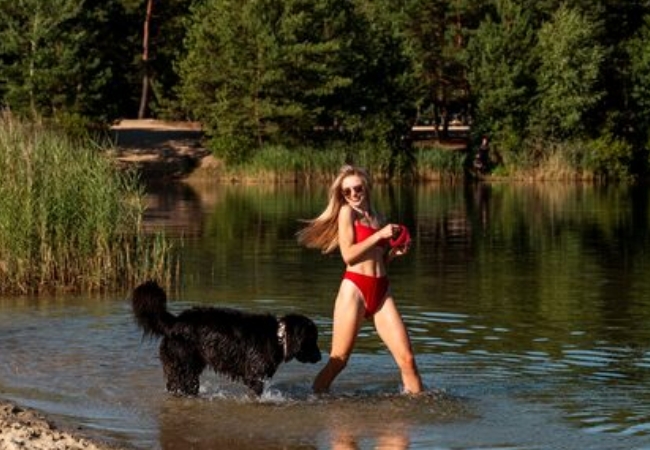
At the edge of a river in Britain, you get a certain feeling that lies somewhere between reluctance and the subdued desire to simply jump in. The water is nearly always chilly. There may be mud on the banks. Most likely, a swan is suspiciously observing you. Nevertheless, season after season, more people than ever before are drawn to it for some reason. In the UK, wild swimming is no longer a specialized activity for eccentrics and early retirees. People now schedule their weekends around it, discuss it over dinner, and use maps.
Originally released as a Google community map in 2007, the wild swimming map is now available at wildswimming.co.uk. After more than a million visits, it has developed into an atlas of rivers, lakes, waterfalls, and quarry pools created by swimmers themselves, with hundreds of entries, images, and ratings. It’s an odd and amazing document that organizes collective knowledge around the straightforward notion that swimming in cold, natural water is worthwhile.
Of all the wild swimming locations in the UK, the Fairy Pools on the Isle of Skye are arguably the most photographed, and for good reason. The water runs through a series of crystal plunge pools fed by falls that carry a faint pinkish tint from the minerals above. For those willing to swim underneath the natural underwater arch and the water is genuinely cold there’s a satisfying sense of having done something slightly braver than intended. Whether or not fairy wings follow is, admittedly, still unclear.
People are surprised by the stretch of Thames near Lower Basildon, which is further south and closer to London. The Thames hasn’t yet earned its reputation as “grey London”. You can find inlets where swans share the water with the occasional narrowboat as you meander through the meadow behind the church. It’s peaty underfoot, so swimming shoes help, but there’s a pastoral quality to it the kind of afternoon that feels implausibly English in the best way. Something similar can be found at Cambridge’s Grantchester Meadows, a two-kilometer river with deep, jump-worthy banks and enough grassland for a proper picnic before a refreshing dip.
In Wales, the Blue Lagoon at Abereiddy is the sort of place you might not believe exists until you’re standing at its edge. It usually stops people in the middle of their sentences, like a flooded quarry filled with turquoise water pressed against rocky coastal cliffs.
Everyone else is gently paddling in the shallows, appearing somewhat happy to be alive, while the thrill-seekers are leaping from the rock faces. Additionally, there is a flooded quarry in Llangynidr that wildswimming.com has somewhat ambitiously described as a “Welsh Angkor Wat” pontoon for jumping, with divers exploring the mining remnants below and a subtle undercurrent of adventure.
On peaceful mornings, Loch An Eilan in Scotland’s Cairngorms National Park, located within the Rothiemurchus Estate, reflects a crumbling thirteenth-century castle. The water feels like “cool, enveloping treacle”, according to author Vicky Allan, who co-wrote “The Art of Wild Swimming” guides. Depending on your personality, this can be either very unsettling or exactly what you want to hear. Llyn Idwal in Snowdonia is another one she recommends, framed by Y Garn, Tryfan and Pen Yr Ole Wen. It’s one of those landscapes that feels like it’s demanding something of you. An early morning dip seems like the appropriate response.
The River Derwent near Chatsworth is possibly the most quietly spectacular of all. Cross the cattle grid from Calton Lees car park, find the muddy entrance to the water, and look back at the house reflected in the current. Somewhere on the estate, you may hear the stags rutting in the fall. The wildlife list along this stretch, which includes sand martins, kingfishers, and Mandarin ducks, seems to have been made up. They didn’t. The cold is worth it.
In the UK, wild swimming seems to have reached a turning point it’s no longer fringe, but it’s also not exactly mainstream. The map of the community continues to expand. The guidebooks are profitable. And every summer, a little more of Britain learns what the movement’s founding author, Roger Deakin, seemed to realize decades ago: plunging into a lake, river, or waterfall plunge pool is one of the few dependable ways to feel truly, unconsciously alive.
i) https://www.wildswimming.co.uk/wild-swim-map-uk/
ii) https://www.houseandgarden.co.uk/gallery/best-places-to-wild-swim-uk
iii) https://rapanuiclothing.com/blog/the-best-wild-swimming-spots-in-the-uk/