

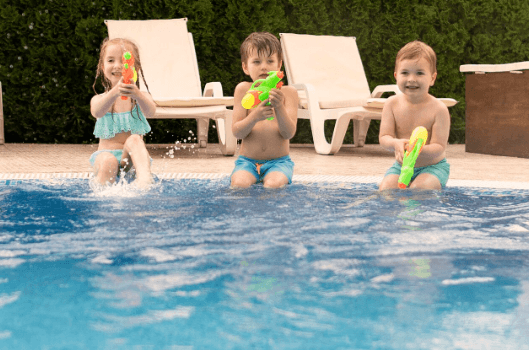
Compared to most sports, swim meets have an oddly quiet atmosphere. The sounds of water splashing, flip-flops squeaking on tile, and coaches calling out times are all audible. However, the tension can feel louder than any crowd if two siblings are in adjacent lanes. Something more profound than admiration may be sparked by that imitation. It turns into inspiration.
In pools all over the world, this scene is repeated. Glancing sideways at the younger brother, the older brother adjusted his goggles. A sister acting indifferent to the lane assignment that was written on the wall. Long before the starting buzzer sounds, the competition starts. Strangely enough, it’s frequently one of the healthiest types of rivalry kids encounter.
| Category | Information |
|---|---|
| Topic | Sibling Rivalry in Competitive Swimming |
| Focus | Turning rivalry into healthy motivation and teamwork |
| Key Environment | Swim teams, family support systems, training pools |
| Example Athletes | The Deloof sisters (University of Michigan swimmers) |
| Psychological Concept | “Sibling Rivalry Paradox” – competition strengthening bonds |
| Relevant Fields | Youth sports psychology, family dynamics, athletic development |
| Reference | https://www.swimmingworldmagazine.com |
Psychologists claim that sibling rivalry is a natural part of family life. Kids fight for attention, acceptance, and occasionally even something as insignificant as the last piece of pizza. However, that instinct is more apparent in sports, particularly swimming. Scoreboards display the times. In front of everyone, medals are distributed. Who finished first cannot be concealed.
Few sports enhance comparison like swimming does. The clock is brutally truthful. The numbers don’t change the reality if one sibling finishes a race in 1:02.31 and the other touches the wall in 1:04.10. It can be fascinating to watch young swimmers come to terms with that reality. A few pout. Some shrug. Surprisingly, many just return to practice with the intention of closing the gap.
It’s difficult to ignore how frequently younger siblings join the pool due to older siblings. A young brother swinging his legs while sitting on metal bleachers and watching his sister cut through the water during practice is a common description from swim parents. Curiosity ultimately prevails. Chasing the same black line at the bottom of the pool, he will soon be enrolling in lessons.
This is frequently referred to as the “sibling rivalry paradox” in family dynamics research. At first, the concept seems paradoxical. Relationships can be strengthened rather than harmed by rivalry between siblings. It’s possible that children are forced to develop resilience earlier than they otherwise might because of the constant pressure to outperform someone who knows you better than anyone else.
There are countless opportunities for that push when swimming. It’s possible for two siblings to work out in the same lane, with the same coach and brutally early workouts. They quickly pick up each other’s habits. There is always an aggressive dive. For the last lap, the other conserves energy. Every practice turns into a silent strategy experiment.
Every now and then, coaches talk about times when competition goes too far. After winning a race, one swimmer boasts excessively. Another retreats, feeling inferior all the time. In severe situations, a child gives up on the sport completely. Families occasionally find it difficult to identify when the mood changes, and there is a precarious balance between motivation and resentment.
Even though it’s not always evident, parents have a significant impact on that balance. Tension can be subtly increased by comparisons, which are frequently intended to be encouraging. “Your sister dropped two seconds this week” is a casual remark that might stick around longer than anyone anticipates. Children have very personal interpretations of fairness, and even seemingly insignificant comments have the power to change their self-perception.
Many coaches advise families to put more of an emphasis on personal development than on outperforming one another. They inquire about each swimmer’s improvements rather than who won the race. a quicker start. a more tidy flip turn. a more powerful last blow. The rivalry softens into something more akin to cooperation, and the discussion moves from comparison to development.
At the top levels of the sport, some of the most striking examples can be found. Growing up swimming together, the Deloof sisters Ali, Catie, and Gabby went on to represent the University of Michigan. During practice, teammates remember pushing each other so hard, but during races, their support was just as evident. It was evident from watching them cheer from the deck that their relationship had not been weakened by the competition.
Siblings frequently give advice to one another in quieter times between races, something that teammates hardly ever do. A reminder regarding the pace. A brief recommendation regarding breathing techniques. Occasionally, it’s just a nod across the pool deck. Little actions that are meaningful to the person in the water but hardly noticeable to others.
In swimming, that dual role of competitor and supporter seems to characterize healthy sibling rivalry. When you compete with someone who is aware of your past, there is also a subtle emotional safety. A sibling recalls the early challenges, such as the frustration of learning flip turns, the fear of diving, and the clumsy strokes during the first lessons. There is a deeper level of comprehension when they celebrate a win.
Rivalry, of course, never completely goes away. And maybe it shouldn’t. After all, competition serves as a practice for the rest of one’s life. There are aspects of ambition and comparison in friendships, relationships, and even careers. Long before they reach adulthood, many swimmers quietly learn how to manage that tension while still showing respect for the person next to them.
It can be like witnessing a miniature version of that process when siblings swim together. First, one makes contact with the wall. Frustrated, the other slaps the water. A short while later, they are making their way back to their team while talking about what went wrong and what could be done better the next time.
It’s an odd alliance that combines loyalty and rivalry. It frequently becomes evident that the two forces aren’t at all antagonistic in the reverberating calm of an indoor pool with the stench of chlorine permeating the air. They are merely distinct currents flowing through the same body of water.
i) https://www.swimmingworldmagazine.com/news/sibling-rivalry-in-the-water-how-to-make-the-most-of-the-situation
ii) https://www.penguinswimschool.sg/blog/encouraging-sibling-support-in-swim-classes
iii) https://smartchoiceparenting.co.za/the-sibling-rivalry-paradox/
iv) https://www.sgsinkorswim.com/post/preventing-competition-between-swimming-siblings