

Sibu is not as well-known worldwide as Kuala Lumpur. Encircled by what was formerly a thick tropical forest, it is peacefully situated on the banks of the Rejang River in Sarawak. However, Sibu is the starting point for anyone attempting to comprehend wealth in Malaysian Borneo; for the Tiong family, it is where everything was constructed.
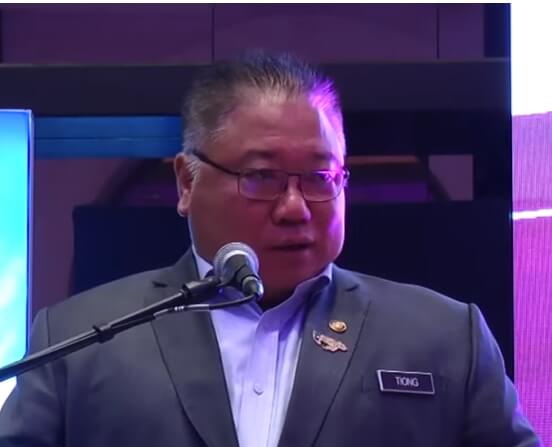
That is the origin of Tiong King Sing, who is now Malaysia’s Minister of Tourism, Arts, and Culture. The late Tan Sri Datuk Tiong Hiew King, his father, transformed the Rimbunan Hijau Group from a 1975 timber company into one of Southeast Asia’s largest private business conglomerates. An estimated 1,500 people traveled to Sibu by plane from Singapore, Indonesia, West Malaysia, and China to say goodbye to Tiong Hiew King, who died on November 11, 2024, at the age of 95. At the time of his passing, Forbes estimated his net worth to be $820 million, placing him 25th out of Malaysia’s 50 richest people in 2025.
| Detail | Information |
|---|---|
| Full Name | Tiong King Sing |
| Date of Birth | 3 September 1961 |
| Nationality | Malaysian |
| Political Party | Progressive Democratic Party (PDP) — President since 2017 |
| Current Position | Minister of Tourism, Arts and Culture (since 2022) |
| Parliamentary Seat | Bintulu, Parliament of Malaysia (since 1999) |
| State Assembly Seat | Dudong, Sarawak State Legislative Assembly (since 2021) |
| Special Envoy Role | Special Envoy to China (since April 2020, serving PMs Muhyiddin, Ismail Sabri, and Anwar) |
| Family Background | Son of timber and media magnate Tan Sri Tiong Hiew King |
| Estimated Net Worth | Not independently verified; family fortune (father’s estate) estimated at US$820 million (RM3.5 billion) as of Forbes 2025 |
| Business Background | Former Managing Director of Timberwell Bhd; divested full stake in 2024 |
When discussing Tiong King Sing’s wealth, that background is important. Although the younger Tiong has developed his own political career over the course of more than 20 years, the institutional and financial framework supporting him was in place long before he was elected to Parliament. It might be more difficult than it appears to distinguish the son’s personal wealth from the family’s larger fortune.
His political trajectory is more evident. In a nation where political allegiances change surprisingly frequently, Tiong King Sing has represented Bintulu in Parliament since 1999. This is a remarkable run of continuity. In November 2017, he was elected president of the Progressive Democratic Party, which had changed its name from Sarawak to West Malaysia. Three different prime ministers have appointed him Special Envoy to China: Muhyiddin Yassin, Ismail Sabri Yaakob, and current PM Anwar Ibrahim. A politician who has carefully cultivated relationships across factional lines is suggested by that kind of bipartisan diplomatic utility.
It’s a little simpler to identify his direct business involvement. For almost six years, he was the Managing Director of Timberwell Bhd, a Sabah-based timber company that produced plywood and engaged in silviculture. Tiong resigned on January 3, 2023, after Prime Minister Anwar Ibrahim appointed him to the Cabinet in early 2023. Then, after a takeover offer in early 2024, he sold all of his shares in Timberwell (roughly 14.2 million, or nearly 16% of the company) for 90 sen each, making about RM12.8 million. Even though the exit was orderly, it wasn’t exactly a windfall because Timberwell had been losing money for three years running at that point, with a net loss of RM644,000 on revenue of RM14.34 million in FY2025.
Watching this unfold gives the impression that Tiong King Sing’s financial story is more about balancing business and public service within a family ecosystem that is, by all accounts, extraordinarily wealthy than it is about spectacular personal wealth accumulation. His father’s Rimbunan Hijau Group expanded into the media, owning major Chinese-language newspapers in Malaysia such as Sin Chew Daily and Guang Ming Daily, as well as The National Daily in Papua New Guinea.
It also had substantial logging interests in Russia and grew to become the largest foreign timber operation in Papua New Guinea. Tiong Hiew King created Media Chinese International Limited, a publishing group with a unique worldwide reach among Chinese-language media, by combining a number of these media assets.
In contrast, the family is the second-largest private landowner in New Zealand, a fact that is seldom mentioned in stories about Malaysian business dynasties but illustrates the extent to which this wealth was allocated and managed over many years.
Aside from the family inheritance and business structure, Tiong King Sing’s personal net worth has not been independently and reliably published. Online estimates frequently confuse his wealth with that of his father. Having served as Special Envoy under three administrations and as chairman of the BN Backbenchers Club from 2008 to 2013, prior to Sarawak’s GPS coalition splitting from Barisan Nasional following the 2018 general election, it can be said with reasonable confidence that he possesses significant political capital possibly more than financial capital in his own right.
It’s difficult to ignore how closely his career mirrors the larger political landscape of Sarawak, where political offices, business families, and timber interests have long coexisted without much regret. In 2009, his father was awarded a Tan Sri title by the Malaysian King, a Datuk from Sarawak, and an honorary knighthood by the British Crown. However, the latter title became contentious when environmental organizations demanded that it be revoked due to the group’s logging activities and destruction of forests. It’s hard to say for sure if that controversy affected Tiong King Sing politically, but the family’s name has been associated with equal parts prestige and scrutiny.
Even after the patriarch passed away, the Tiong family’s position on the list of Malaysia’s 50 richest people remained stable, as their combined net worth reached US$90 billion in 2025. Today, Tiong King Sing carries on that legacy in a ministerial position that appears to be very different from timber politics. A different type of portfolio is used for tourism, the arts, and culture. There is probably no definitive answer to the question of whether that is a purposeful rebranding of the family’s public image or just the normal course of a political career.
Clearly, the Tiong story provides a window into the flow of old Sarawakian money from Sibu to Wellington, from forests to newspapers, and ultimately into the corridors of Putrajaya.
i) https://en.wikipedia.org/wiki/Tiong_King_Sing
ii) https://www.apecf.org/en/leadership/sir_tan_sri_tiong.html
iii) https://www.forbes.com/profile/tiong-hiew-king/
iv) https://www.gurufocus.com/insider/191057/tiong-hiew-king