

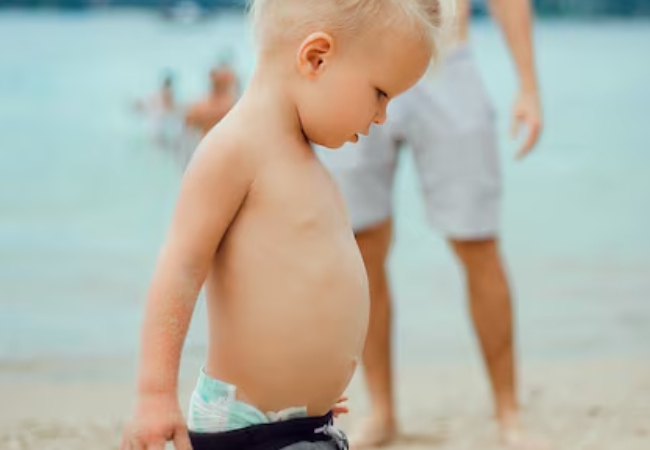
When a regular diaper first comes into contact with water at a public pool, a certain kind of chaos ensues. As the parent frantically tries to remove the infant from the water before anyone notices, the thing visibly expands, pulling down dramatically at the waist, heavy, and soaked. It happens more than you’d think. And it was completely avoidable almost every time.
The difference between swim diapers and regular diapers is not cosmetic. It all comes down to what each one is designed to do when it gets wet, and there is a huge difference between those two results. Sodium polyacrylate, a polymer used in regular diapers, is made to absorb liquid at a rate that appears nearly unreasonable until you actually need it. That’s exactly the point in dry conditions. But in the pool, that same material works against you, soaking up surrounding water until the diaper becomes an unwearable, waterlogged mass. A few splashes is all it takes.
Swim diapers don’t absorb anything not water, and not urine either. That surprises a lot of first-time parents. There’s a reasonable assumption that a swim diaper is just a diaper that happens to look good with a swimsuit, but they work on an entirely different principle. They remain functional in the water because they allow liquids to flow through them freely. They are made to keep the pool clean and free of contamination by containing solid waste. The majority of pools enforce their use, which is advised by the CDC for any child who is not potty trained in a public swimming area.
The urine question might be causing more anxiety than it should. Urine from a healthy baby passing through a swim diaper is not the sanitary emergency it may seem at the time, and chlorinated pool water effectively manages pathogens. A good swim diaper truly justifies its price when it comes to faecal matter, which is a completely different scenario where a tight fit at the waist and thighs is crucial. Over years of development, companies like Pampers Splashers and reusable options like the Happy Nappy have perfected this seal, and there’s a reason why swim schools all over the world have chosen particular products that they genuinely trust.
It is worthwhile to consider the fit question. A swim diaper is practically useless if it sits loose at the waist or gaps at the legs. The majority of brands advise sizing in close proximity to your baby’s typical diaper size, but it’s important to verify the precise waist and thigh circumference measurements rather than just weight ranges. Reusable swim nappies, typically sized by age, need the same scrutiny. Instead of something that bunches or constricts, the objective is something that moves and looks like fitted swim shorts.
You can tell which parents have figured this out and which ones have not when you watch them manage beach and pool days with small children. The former have a regular diaper ready for the moment they emerge, while the latter have a swim diaper on just before going into the water. The latter are often somewhere in a changing room, dealing with the aftermath of a soaked disposable that never stood a chance. Even the best swim diaper has its limitations when it comes to loose stools, so it makes sense to completely avoid the water session until the baby’s digestive problems are resolved.
Additionally, there is the issue of timing. Swim diapers should be put on right before getting into the water, not at the parking lot an hour in advance. Additionally, they should be removed and replaced as soon as an accident occurs or within thirty to sixty minutes of being in the water. Just as regular diapers can cause chafing and rash if left out for an extended period of time, so too can leaving a baby in a wet disposable swim diaper while they are eating lunch, wandering the beach, or out of the water.
Most parents eventually come to the conclusion that regular diapers and swim diapers aren’t really in competition with one another. They address entirely different issues. One is for the swimming pool, and the other is for all other places. The entire summer is much less stressful when you have both on hand and know when to switch between them. And probably a lot drier, too.
i) https://poshpeanut.com/blogs/news/swim-diapers-vs-regular-diapers-whats-best
ii) https://www.pampers.com/en-us/baby/diapering/article/swim-diapers