

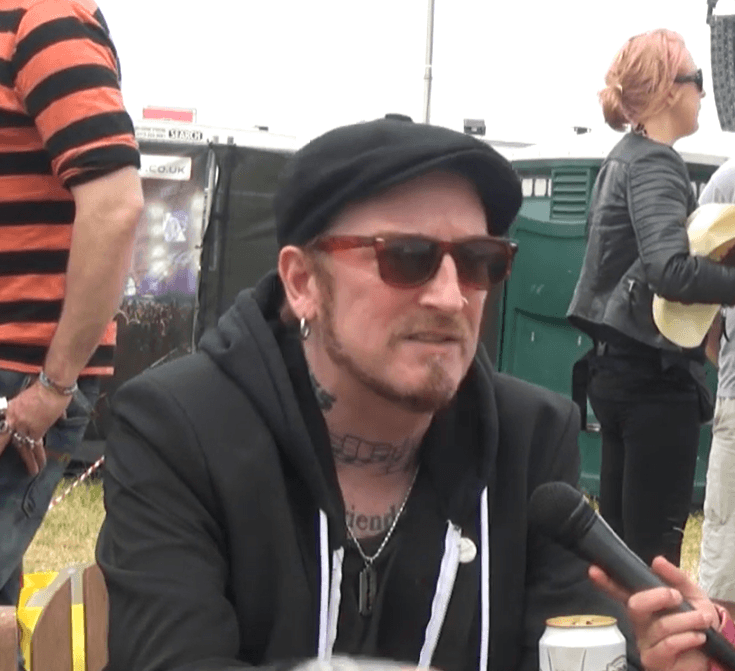
Observing a man perform while discreetly carrying a diagnosis that most people would stop for is unsettling. The restless force behind The Wildhearts, Ginger Wildheart, appears to be doing just that writing songs, organizing performances, and possibly most remarkably completely rejecting cancer treatment.
The news didn’t come with the typical polished tone of a publicist’s announcement. It was almost blunt. Ginger had been experiencing excruciating pain during a December 2025 tour, to the point where he had to leave the stage in between songs. Nevertheless, he continued to perform while taking painkillers because he was determined not to let the audience down. It’s difficult to ignore how consistently he prioritizes the audience throughout his career, sometimes at his own expense.
| Category | Details |
|---|---|
| Full Name | David Leslie Walls |
| Stage Name | Ginger Wildheart |
| Date of Birth | December 1963 |
| Age | 61 |
| Nationality | British |
| Profession | Musician, Singer, Songwriter |
| Known For | Founder & frontman of The Wildhearts |
| Genre | Rock, Hard Rock |
| Illness | Mantle Cell Lymphoma (rare cancer) |
| Treatment Decision | Refused treatment |
| Estimated Prognosis | 2 – 3 years (self-stated) |
| Active Status | Continuing to perform & write music |
| Official Band Website | https://www.thewildhearts.com |
When the diagnosis was made, it seemed to take a backseat to his response. A rare and aggressive type of non-Hodgkin lymphoma, mantle cell lymphoma doesn’t lend itself to hasty decisions. Ginger, however, responded right away and firmly. He refused to receive medical care. He presented it as a decision rather than a resignation. He referred to it as dignity.
People seem to be more disturbed by this choice than by the illness itself. Social media was inundated with fans’ conflicted admiration as well as sympathy. Some referred to it as courageous. Quietly, others didn’t seem to know how to interpret it. It’s still unclear if this is acceptance, defiance, or something more nuanced like a combination of philosophy, exhaustion, and living life to the fullest.
One is reminded of Ginger’s life philosophy as they watch this play out. He has openly discussed his struggles with mental health and his rejection of systems that, in his opinion, provided clarity rather than numbness. It appears that medical intervention is now subject to the same skepticism. He claims to have lived “the life of ten men,” and his rejection makes some sense. It doesn’t matter if other people agree or not.
Not only is the diagnosis compelling, but so is the picture of him carrying on with his work. There is new writing being done. There are still scheduled shows. He’s still getting ready to go out and perform somewhere, maybe backstage at a tiny venue, amplifiers humming. This continuity seems almost unreal, as though the standard guidelines regarding illness and withdrawal don’t quite apply in this situation.
The way fans have reacted is also subtly revealing. He is not being begged by many to reevaluate his course of treatment. Rather, they are reminiscing about concerts, conversations, and little moments that now seem to have greater significance. It implies that Ginger has always had a more reciprocal than transactional relationship with his audience. He has frequently stated that the people in the music industry supported him just as much as he supported them. That exchange seems more apparent now.
It is impossible to overlook the larger context. Ginger’s position seems almost out of step in a time when public figures frequently portray illness as an aggressive battle. It poses awkward queries. Is fighting the only narrative that can be accepted? And what happens if someone decides not to?
Mantle cell lymphoma has a harsh medical reality. It involves aberrant B-cells building up in the body and frequently spreading swiftly. There are treatments available, but they can be harsh, sometimes prolonging life but not always providing a cure. When viewed that way, Ginger’s choice might not be as rash as it first seems. The finality of it persists, though.
His messages have a strange serenity; there is very little mention of suffering and no mention of fear. It’s just time. He says, almost as if laying out a final tour schedule, “two to three years.” It’s an odd way of framing death, making it seem organized and nearly controllable.
Nevertheless, it’s difficult to ignore the emotional undertone. Present, but not loud or dramatic. There is a sort of silent tension when you watch someone move forward while realizing the end is near. At least not yet, it’s not a tale of decline. Under very different terms, it is the tale of continuation.
It’s unclear what will happen next. Performance plans are subject to change. Unexpected changes in health are possible. Even his own viewpoint could change. But for the time being, Ginger Wildheart appears dedicated to a path that feels incredibly personal despite being unusual.
A narrative that defies simple interpretation is taking place somewhere between a hospital report and a rehearsal space, between guitar riffs and medical jargon. And maybe that’s the point. It’s not necessary to solve every problem neatly.