

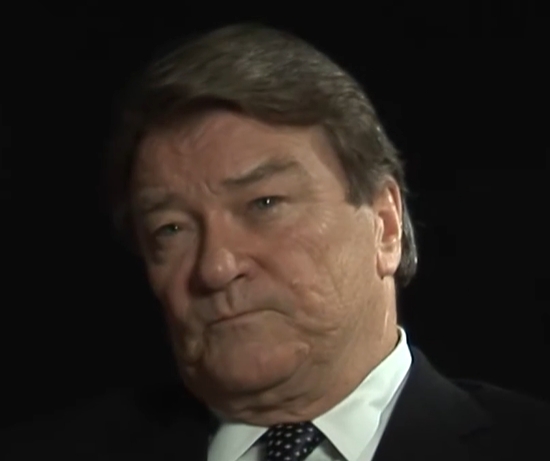
For thirty years, Steve Kroft asked the questions that other journalists were reluctant to ask on 60 Minutes. He was seated across from serial killers, warlords, and presidents. At a time when most reporters would not travel within a hundred miles of Chernobyl, he strolled through the contaminated soil. Then, in May 2019, he just walked away. There was no grand farewell broadcast. No resentful public declaration. Just a silent handoff and the end of thirty years of unrelenting labor.
In the years since his retirement, concerns have been raised regarding Steve Kroft’s health and illness in his later years, but the picture that emerges is more complex than any one headline can convey. During one of his last appearances on CBS, Kroft expressed his desire to depart “while I still had all of my marbles” to his longtime colleague Lesley Stahl.That expression stuck. It was more of a signal than a confession, the kind of thoughtful, deliberate statement that a man who has spent thirty years learning how to read between the lines is perfectly capable of crafting.
| Field | Details |
|---|---|
| Full Name | Stephen F. Kroft |
| Date of Birth | August 22, 1945 |
| Place of Birth | Kokomo, Indiana, USA |
| Education | B.A., S.I. Newhouse School of Public Communications, Syracuse University (1967); M.A., Columbia University Graduate School of Journalism (1975) |
| Military Service | U.S. Army, 25th Infantry Division, Vietnam War; Bronze Star for Meritorious Achievement |
| Career | Correspondent, CBS News (1980–2019); 60 Minutes Correspondent (1989–2019) |
| Awards | 9 Emmy Awards (incl. Lifetime Achievement, 2003); 3–5 Peabody Awards; George Polk Award; Alfred I. duPont-Columbia University Silver Baton |
| Notable Interviews | Bill & Hillary Clinton, Barack Obama, Clint Eastwood, Charles Cullen |
| Personal Life | Married to journalist/author Jennet Conant; one son, John Conant Kroft |
| Retirement | May 19, 2019, after 30 seasons on 60 Minutes |
| Reference | CBS News – 60 Minutes |
When he left, he was seventy-three. In a genuine and unscripted moment, his colleague Stahl informed him that 74 wasn’t old, at least for some of them. Kroft chuckled. Watching the retrospective video gives the impression that the retirement was more about something more difficult to identify than physical limitations. Refer to it as clarity. the realization that the body of work was finished.
Only a small amount of information about Kroft’s health is available to the public, and this is mostly his own fault. He has never discussed illness or diagnosis using precise medical terminology. He stated that he still had “other things” he wanted to do and that he had “the energy to do them”. That framing is important. Instead of someone being forced out, it’s the language of someone choosing to leave. His speaking fee, which is said to have decreased to between $30,000 and $50,000 after retirement, points to a man who continued to be involved and active rather than one who quietly faded from view.
It’s important to keep in mind what his body had already taken in prior to sitting in the 60 Minutes chair. In his early twenties, he was drafted into the Vietnam War, assigned to the 25th Infantry Division in Cu Chi, and covered the invasion of Cambodia for a while. He was awarded a Bronze Star. Later, he covered the U.S. invasion of Grenada, reported from El Salvador during a civil war, witnessed the assassination of Indira Gandhi, and traveled through the contaminated grounds of Chernobyl in 1990. These experiences earned him an Emmy and, by all accounts, required a certain level of physical and mental stamina.
Such journalism has a cost that isn’t always evident in medical records. It manifests itself in other ways, such as the thoughtfulness with which a person eventually retreats and the consideration with which they select their last narratives. During his final years at 60 Minutes, Kroft conducted an investigation into the lack of treatment for mental illness in the United States. This report, which came after a spate of mass shootings, earned him his twelfth Emmy. It’s difficult to ignore the significance of that topic and the fact that he selected it.
The personal aspect must also be taken into account. An extramarital affair with a New York lawyer was first reported by the National Enquirer in 2015. Kroft publicly acknowledged it and expressed regret. These are the kinds of incidents that cause a person to age in ways that don’t show up on a health chart: the deterioration of one’s professional reputation, the discreet renegotiation of a marriage, or the assessment of one’s true legacy. He stayed with his wife, Jennet Conant.
Regardless of whether a particular illness caused him to leave, his retirement now reads like the choice of a man who had carefully considered all the options. He told Stahl that instead of waiting to be carried out, he had always respected those who left at the top of their game. That is either wisdom or a very skillful application of wisdom. It’s most likely both with Kroft. He interviewed people who were adept at crafting public narratives for decades, and at some point, he learned how to craft his own.
What’s left is a body of work that is truly challenging to classify. more than five hundred stories. Three Peabody Awards. A Lifetime Achievement Award. The first American journalist to be granted access to Chernobyl. The pivotal Clinton interview during the 1992 election. Over 25 million people watched Barack Obama’s first post-Bin Laden interview. And that long, unforgettable silence from Clint Eastwood 30 seconds of a movie star staring across the set while Kroft waited him out, refusing to respond to a question about how many children he had. Perhaps that moment encapsulates a key aspect of what made him successful in the position.
i) https://www.yahoo.com/entertainment/steve-kroft-final-appearance-60-222555204.html
ii) https://www.djournal.com/lifestyle/arts-entertainment/former-60-minutes-correspondent-steve-kroft-speaks-out-about-cbs-show-s-crisis/article_702f5813-a3ff-53a6-91f5-203204f183b1.html
iii) https://speaking.com/speakers/steve-kroft/
iv) https://thehill.com/homenews/media/444253-steve-kroft-to-retire-from-60-minutes-after-30-years-with-show/
v) https://www.cbsnews.com/news/happy-25th-steve-kroft/